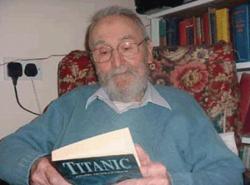
Teodor Shanin
 Great Britain
Biography of Theodore Shanin
Theodore Shanin, a well-known British sociologist and professor, gave his first interview to "Izvestiya" in Moscow fifteen years ago. He continues to surprise with his life, full of paradoxes. Born in one country, he helped create another, and received recognition from a fourth for his contributions. His biography could be the basis for puzzles in a quiz. For example, his father was born in Russia, his mother in Germany, and he himself in Poland, yet they are all natives of the same city, which is now the capital of Lithuania. Life is not as amusing as a quiz. Vilnius changed hands several times, but it is unknown which was more dangerous for his Jewish family - attempts to save them or repression, which sometimes resulted in their salvation.
In his first interview in Moscow, Shanin surprised everyone. He still surprises today. He has a unique life story, and he was born in one country while creating another. He has been awarded for his contributions to a fourth country. "I am expected in China," Shanin said. "But I will go a little later, maybe in a month. I need to learn the language to understand what is happening there."
"You are going to learn Chinese in a month?" I asked, puzzled.
"Yes," Shanin agreed. "It's not that difficult. Any language can be learned quickly if approached systematically and with a purpose. Every language has a limited active vocabulary. There are also international words, specialized terms, and key words. Understanding the logic of the language is crucial. When I need a language for work, I can master it without any problems, to the extent that I need it."
I found it even more interesting and proposed to meet for another interview after his trip to China. However, it turned out that Shanin would only be returning to Moscow in a year. Nevertheless, he was determined to schedule the exact time of our meeting down to the minute. "How about 2:30 PM?" he suggested.
"Perhaps without the quarter past three," I suggested, trying to be clever. He had just arrived in Moscow then and had not been written about in any Soviet newspapers. Our conversation was the first.
With a shaved head, dressed all in black, the professor from Manchester spoke with a strong accent but had a virtuosic command of the Russian language. He talked about things that were still unfamiliar to us. He introduced us to our own genius, Chayanov, and argued that progress is not necessarily the best perspective. He convinced us that the world does not move from unlimited diversity to a monolith, but rather from one diversity to another. He applied the science he created, "krestyanovedenie," to Russian practice.
Shanin was different from others, but he did not fit the stereotypical image of a foreigner. He had no boundaries. It was apparent that he was not just a sociologist, not just a scientist, and not just an Englishman.
His fate seemed extraordinary, and indeed it was. One year later, on the appointed day, I found the note in my notebook. It was the exact day. Exactly one year had passed. I looked at the clock - twenty-five minutes to three.
At that time, it was customary for a foreign visitor to be greeted at the entrance personally. So, I rushed downstairs. Exactly fifteen minutes before the quarter past three, Shanin appeared in the doorway. He was not surprised to see me. At that time, he was still surprised by the lack of organization and precision he encountered in Moscow. Now, he was no longer surprised.
Shanin's biography could be the basis for puzzles in a quiz. For example, his father was born in Russia, his mother in Germany, and he himself in Poland, yet they are all natives of the same city, which is now the capital of Lithuania. Life is not as amusing as a quiz. Vilnius changed hands several times, but it is unknown which was more dangerous for his Jewish family - attempts to save them or repression, which sometimes resulted in their salvation.
In 1939, when the Soviets came to the city, Shanin's father was sent to a camp in the Urals, and ten-year-old Theodore, along with his four-year-old sister and mother, was exiled to Siberia. However, at the last moment, an officer took pity on the little girl and allowed her to stay with the elderly instead of making the difficult journey. They were grateful to the officer, but little did they know that by sparing the girl, he sentenced her to death.
The city was occupied by the Germans. When Theodore and his parents returned home after the war, after many hardships and adventures, they found only a mass grave, where his grandfather and niece were among the 80,000 executed. They lived in Poland after the war, and then in France.
In 1948, when the UN decided to create the Israeli and Arab states on the territory of Palestine, Theodore was seventeen years old and had just finished school. He already had the same qualities as today - the ability to analyze and act bravely.
"I knew for sure that a war would break out," Shanin said. "I decided that I had to participate in it to do my part." He had to beg his parents, illegally cross a few borders, and lie twice - about his age and leaving his sister at home - to join the commandos.
He became a volunteer in the commandos, the Israeli special forces. However, at that time, there was no Israel yet. Shanin arrived in the area a few weeks before the declaration of the Jewish state and began creating the state with a gun in his hand.
His actions and the operations in which he participated became part of the legendary history of the country. He became a hero and had the opportunity to choose a new life. He gained a new homeland, but not for long. His own ideas of what is right and wrong were always above national, state, and any other corporate interests. The intricacies of his biography were dictated by this.
When asked fifteen years ago why he came to Russia, he answered in a strange way, but it made sense to him: "To act honestly, you don't need a special reason. If there was a draft during the Vietnam War, I would have gone to fight against America. During the Spanish Civil War, if I were eighteen, I would have joined the International Brigades. Now, during the Perestroika in Russia, that's why I'm here. Soon, I realized that Shanin and Israel had different ideas of justice.
In 1956, during the Suez Crisis, he went to the front again but was already against the war and openly convinced everyone that the war was unjust. "Fortunately," Shanin said, "the war only lasted six days. But my disappointment in Israeli politics continued."
Eventually, this led him to leave the country he helped create. After some time, he became a renowned English scholar.
Unexpectedly, the British character resonated with Shanin both stylistically and morally. Recently, the Queen of England awarded Professor Shanin the highest honor of the British Empire - the Order of the British Empire.
The wording of the royal decree may seem surprising to some: "For his contributions to the development of Russian higher education." So, his contributions were to Russia, but the award was given by Britain?
Shanin was delighted by this paradox, not only because he became a knight but also because of its unique logic. "As a sociologist, this is incredibly interesting," he said. "In a world that is becoming increasingly nationalist and often racist, if you do something for my nation, it is good, and you should be rewarded for it. If you do something for others, let them reward you. But there is the logic of civilization. This award shows that England is a civilized country. I was honored not for doing something good for England, but for doing something good as a British citizen. They showed that I am a citizen of a civilized country, saying to me personally, 'You are doing good work, Theodore.'"
Shanin's work, recognized by the Queen, is the Moscow School of Social and Economic Sciences. It has been operating for seven years. Shanin conceived, created, and leads the school.
It was an experiment, and it proved to be so successful that all of Europe followed this path years later. "The Bologna Process, which everyone now knows about, was started in Moscow seven years before," Shanin said. "From the very beginning, I believed that it was not possible to simply transplant a specific university system, which grew on the basis of a particular culture, to a country with a different culture. However, it is possible to integrate the best elements of British and Russian educational systems. That is what we achieved."
Shanin's school is unconventional. Exams are not taken in the traditional way, and grading is different. The school focuses on teaching analytical thinking rather than rote memorization. Graduates receive diplomas from the University of Manchester. Non-Moscow students receive scholarships. There are also "mature students" who pursue a second education. Shanin finds them the most interesting because they have a better understanding of what they want.
He believes that personal and professional values are equally important. He considers a strong knowledge base and the ability to use it as protection against temptations. "The school should give students confidence that they can overcome difficulties without selling their souls to the devil," he said, "because selling one's soul is also a way to cope with difficulties. That is the reality in every society, especially in modern Russia."
"What happened?" I asked Shanin. "When you first came to Moscow, you were interested in issues related to Russian peasants, the perspectives of the Russian countryside. We conducted extensive and unique research. But now, what has happened? Have educational problems distracted you?"
Shanin rarely changes his expression or reveals his feelings during conversations or debates. In this, he is quite English. But I sensed a pain that seeped through his logical and concise explanations. He seemed like a scientist forced to part with the object of his research or someone who felt close to the Russian peasant.
"Here is the story," he said. "At that time, there was a wide range of possibilities for Russian rural society. As a scientist, I found it fascinating and wanted to be involved. But that period has passed. The corridor has closed and become narrow. Agriculture is rapidly moving towards polarization, with a small number of people controlling the majority of the land, where purely market-oriented agriculture becomes the norm. This is irreversible for a certain period. I have no doubt that it will lead to a crisis in rural society. However, that is a matter for the future. Those who make decisions will have to deal with it. Today, rural topics are no longer interesting to me as a scientist."
"Where is the turning point or decision that led to the narrowing of the corridor for the Russian countryside?" I asked the peasant expert, Shanin.
"There is no specific turning point," he explained. "There is a process. And as for decisions... very often in Russia, decisions are made by not making decisions. That's the case here. There were no decisions regarding credits for agriculture that could benefit not only large landowners. There were no decisions to help organize cooperative structures that could help farmers survive. There were no decisions to create a support and training system for small landowners, like the English extension service, and many other things."
Shanin shrugged and sipped his tea. But I persisted. I wanted to know if Shanin had given up on the science he had created and if he believed that the future of the Russian peasant was so bleak.
Shanin gave an almost parable-like response: "Long ago, when I defended my doctoral thesis, my supervisor asked me what I planned to do next. I said I didn't know, but I could say with certainty what I would never do. That was anything related to the rural theme to which I had devoted so much. He smiled and remarked that completed work often never lets you go. And that's what happened.
"For example, there was a story in England. They were left without agriculture and rural economy, which had become so inefficient by the First World War that it simply died. For a while, they feared that England itself would die, but fortunately, it survived. After that, the British government decided to support its agriculture. It began to revive and became one of the most efficient in the world again. So, even agriculture can be resurrected from nothingness if the conditions are right."
Since we had clarified that he did not learn Chinese, I continued with other questions that had remained unanswered during our fifteen-year acquaintance. What does he read? How does he relax? Who are his friends?
Shanin's answers were unexpected. For example, I could never have imagined that the favorite place of this person constantly traveling the world was Kamchatka. There, in the Nalychevo Park, he feels like the owner.
"My photo is hanging there, by the way," Shanin said proudly, "as one of the park's creators."
He is a devoted theater enthusiast and enjoys listening to Prokofiev's music. One book holds a special place in his heart - "The Glass Bead Game" by Hermann Hesse. For him, it is one work, even though it consists of three novels. He believes they merge into a single entity. "I could convincingly explain why," he said.
Among his friends, there are many who are much younger than him. He believes that age does not define maturity. "Our students become young scholars rather than aging students," he said. "This is because we develop their analytical thinking skills, rather than simply memorization. We teach them to manage their knowledge."
I noticed that his students' maturity is not only in the academic sense but also in life. Shanin believes that his school prepares them to make a difference in Russia, contrary to his initial fear that graduates would leave the country. "Yes, some are quite successful in other countries," he admitted. "But the majority stay here. They are needed here, and we prepare them for this."
Shanin's life and work are intertwined. He believes that personal and professional values are equally important. He is certain that one's values and knowledge are shields against adversity. His journey has been filled with paradoxes, but he remains dedicated to his mission - to make a difference and contribute to society.