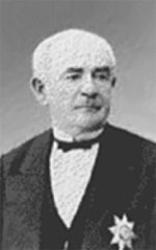
Teofil Aleksander Lenartowicz
 Poland
- Biography of Teofil Lenartowicz
- Early Life and Activism
- Academic Career and Artistic Pursuits
- Published Works and Legacy
- Death and Burial
Biography of Teofil Lenartowicz
Teofil Lenartowicz was a Polish ethnographer, sculptor, and poet. He spent a significant part of his life in Italy, where he married a sculptor named Zofia Szymanowska. Lenartowicz was known for his patriotic and spiritual poems, as well as lyrical and historical epics based on the folklore of his beloved Polish region, Mazowsze.
Early Life and Activism
Lenartowicz was deeply connected to the intellectual bohemian circles in Warsaw and actively participated in the struggle for independence. During his time in Kraków, he took part in the Greater Poland Uprising of 1848 and was labeled a conspirator. These experiences greatly influenced his poetry, which often reflected his longing for his homeland.
Academic Career and Artistic Pursuits
While in exile, Lenartowicz taught Slavic literature at the University of Bologna. In addition to his literary endeavors, he also painted portraits and created sculptures and tombstones. His most famous poem, "Złoty kubek" ("The Golden Cup"), was based on traditional Polish Christmas hymns. It tells the story of an orphan girl who pleads with the Heavenly Creator to make her a golden cup from fallen golden apples and leaves of a golden apple tree.
Published Works and Legacy
Lenartowicz published two collections of poems, "Lirenka" and "Zachwycenie," in 1855. His most notable work, "Dwaj Towiańczycy," describes the deaths of Michał Szweycer and Adolf Rozwadowski, known conspirators and his former associates. In his later years, Lenartowicz focused on writing memoirs and engaging in literary criticism.
Death and Burial
Teofil Lenartowicz passed away on February 3, 1893, in Florence. His remains were transported back to Poland and buried in St. Stanislaus Church in Kraków. His contribution to Polish literature and art continues to be celebrated and remembered.