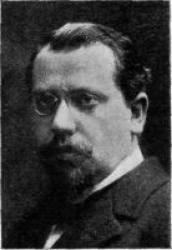
Teofilus Matulenis
 Lithuania
- Archbishop Teofilius Matulionis of the Roman Catholic Church
- Apostolic Administrator and Bishop
- Persecution and Imprisonment
- Solitary Confinement and Forced Labor
- Archbishop and Resistance
- Release and Death
Archbishop Teofilius Matulionis of the Roman Catholic Church
Early Life and PriesthoodTeofilius Matulionis was born on June 20, 1873, in the village of Kudariškiai, Lithuania. He came from a peasant family and studied at the Catholic Theological Seminary in St. Petersburg. In 1900, he was ordained a priest and served as a vicar in the parish of Varklyanai.
Apostolic Administrator and Bishop
In 1901, Matulionis was appointed administrator of the parish in Bykhov, and in 1907, he became the administrator of the parish in Rykovo. In June 1910, he became a vicar in the parish of St. Catherine in St. Petersburg. From 1912 onwards, he managed a chapel in the village of Aleksandrovskoye. In 1914, he was appointed rector of the parish at the Church of the Sacred Heart of Jesus in Petrograd.
Persecution and Imprisonment
In March 1923, Matulionis was arrested and became one of the defendants in the Moscow trial of Catholic clergy. He was sentenced to three years in prison and served his sentence in the Sokolniki and Lefortovo prisons in Moscow. In 1926, he returned to his parish and also became the administrator of the parish in Kolpino.
On December 8, 1928, he was appointed titular bishop of the historic diocese of Matrega on the Taman Peninsula at the request of Bishop Antoni Malecki. He became the bishop-coadjutor for the Apostolic Administration of Leningrad. However, on November 24, 1929, Matulionis was arrested before Malecki.
Solitary Confinement and Forced Labor
Matulionis was accused of illegal connections with foreign individuals and of leading a "clandestine national-chauvinist Latvian school." On September 13, 1930, he was sentenced to 10 years in prison. He served his sentence in the Solovetsky Special Purpose Camp, where he was put on a punitive assignment to the island of Anzer.
On July 22, 1932, he was arrested again for allegedly participating in an anti-Soviet group. He was characterized as one of the "ringleaders who led the group of priests with great audacity." He remained courageous during interrogations and was sentenced to a further year in solitary confinement on May 27, 1933. However, he was released in September 1933 and exiled to Lithuania as part of a prisoner exchange.
Archbishop and Resistance
After his release, Matulionis visited Rome, where he met with Pope Pius XI. He served in the Diocese of Kaunas and later became Bishop of Kaišiadorys, leading the diocese during World War II. On December 18, 1946, he was arrested again for allegedly encouraging clergy to fight against the Soviet government and harboring priests involved in such resistance. On September 27, 1947, he was sentenced to seven years in prison.
Release and Death
Matulionis was released on May 28, 1954, and sent to a nursing home under the surveillance of the KGB. It was not until May 5, 1956, that he was allowed to return to Lithuania, where he was forbidden from leading the diocese and forced to live in isolation in Šeduva. Despite this, he secretly ordained Vincentas Sladkevičius as a bishop in 1957, who later became the first Lithuanian cardinal. Pope John XXIII elevated Bishop Matulionis to the rank of archbishop.
Matulionis died on August 20, 1962, and was buried in the cathedral of Kaišiadorys. His beatification process began in 1990, and a bust of him was installed in the Vilnius Cathedral in 1994.