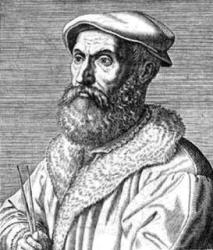
Theodor Kaluza
 Germany
Biography of Theodor Kaluza
Theodor Kaluza was a German scientist who proposed the introduction of a fifth dimension into mathematical physics, which later formed the basis for the Kaluza-Klein Theory. He was born in the small Silesian town of Ratibor, which was then part of Germany (now Racibórz in Poland, 80 km southwest of Katowice). Kaluza's father was a renowned linguist, whose work on phonetics of the German language and analysis of Chaucer's poetry gained popularity among his contemporaries. Influenced by his father, Kaluza became a rare expert in linguistics, studying 15 languages including Ancient Hebrew, Arabic, Hungarian, and Lithuanian. Throughout his life, he maintained an interest in languages, literature, and philosophy.
At the age of 18, Kaluza went to study in Königsberg, the city of Kant. At the University of Königsberg, which boasted a distinguished mathematical school, Kaluza studied at the Faculty of Mathematics from 1903 to 1908. In 1909, he defended his doctoral dissertation on the Chirnhaus transformations and was appointed as a private lecturer.
The Kaluza-Klein Theory
In 1918, the German mathematician Hermann Weyl attempted to create the first unified field theory, or theory of everything, in which electromagnetic and gravitational fields would be geometric properties of spacetime. This theory was mathematically and aesthetically elegant, and Einstein immediately became fascinated by it. However, it was soon discovered that there were significant gaps in this theory. Captivated by the beauty of Weyl's ideas, Kaluza decided to propose his own original approach to the unified field theory. In April 1919, Kaluza succeeded in proving the possibility of combining the equations of electromagnetism and gravity in ordinary 4-dimensional space by introducing a "curled up" fifth dimension. Thus, Kaluza concluded that in a 5-dimensional space, gravity and electromagnetism were unified. He outlined his theory in a letter to Einstein, who advised him to continue exploring this topic. Although Kaluza had no evidence that the world was 5-dimensional, Einstein's intuition told him that the beauty of Kaluza's mathematical calculations could indicate their correctness. In the end, Einstein submitted Kaluza's article "Zum Unitätsproblem der Physik" to the Prussian Academy of Sciences in 1921 and published his own work on the 5-dimensional method. Contemporary scientists regarded Kaluza's theory as a mathematical exercise devoid of physical meaning. Eventually, even Einstein became disillusioned with this theory because it had no place for the electron. In 1926, the Kaluza Theory was expanded by the Swedish physicist Oskar Klein and became known as the Kaluza-Klein Theory. Einstein returned to it in 1930, but once again his attempts to create a theory of everything were unsuccessful.
Rediscovery and Legacy
Most physicists were skeptical of Kaluza's theory, and it remained forgotten on dusty shelves of mathematical history for over 50 years. However, in the 1980s, Michael Green and John Schwarz demonstrated that superstring theory could unite gravity with electromagnetism, as well as with strong and weak interactions. This theory operated in a 10-dimensional space, with 6 "extra" dimensions considered "curled up." Thus, the Kaluza-Klein Theory was revived. This fate of the theory, initially rejected and ridiculed, and later reconsidered and revived, was described in the revised edition of the book "The New Ambidextrous Universe" by science popularizer Martin Gardner. In addition to the theory of 5-dimensional space and the general theory of relativity, Kaluza published articles on pure mathematics and topics in mathematical physics; he worked on models of atomic nuclei and general energy issues. In 1929, Kaluza received a professorship in Kiel. In 1933, he obtained a professorial position in Göttingen, where he worked until his death. Kaluza passed away suddenly on January 19, 1954, two months before receiving the title of "emeritus professor."