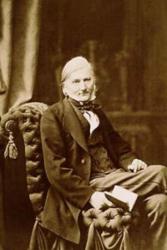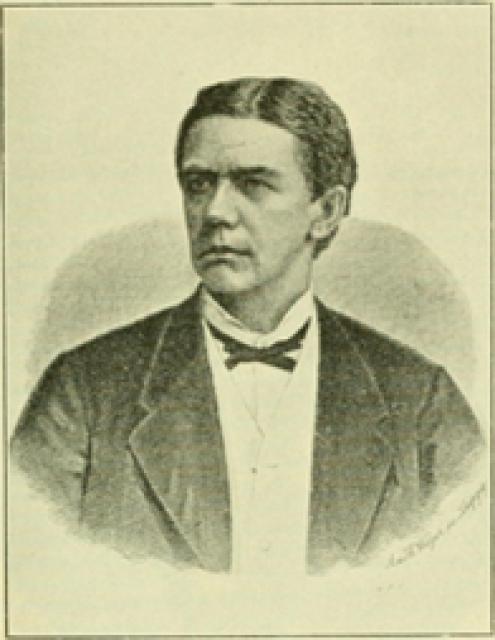
Theodor Kjerulf
 Norway
Theodor Kjerulf helped turn Norwegian geology from scattered observations into a systematic study of the country’s rocks and landscapes. A field scientist with a poet’s eye for scenery, he became the first director of the Geological Survey of Norway and a leading interpreter of the Oslo region’s ancient strata. Alongside maps and textbooks, he published lyric poetry and travel writing, building a career that moved between the laboratory, the mountain trail and the printed page.
A scholar shaped by loss and the landscape
Kjerulf was born in Christiania, now Oslo, on March 30, 1825. His father, Peder Kjerulf, was a senior civil servant, and his older brother Halfdan became a noted composer. A family tragedy in 1840–41, when his father, a sister and a brother died, marked his youth.
He entered university in 1843 and qualified in mining science in 1847. His first major geological study trip took him across Hardangervidda, a high mountain plateau in southern Norway. He later conducted fieldwork in Iceland and parts of Germany and the Alps, and studied chemistry with prominent researchers in Bonn and Heidelberg. These journeys helped shape his approach: careful observation and analysis, not elegant theory alone, should explain the country’s complex rock record.
Mapping a young nation’s geology
Kjerulf became a lecturer in mineralogy and geology at the Royal Frederick University in Christiania in 1858. That year also marked the beginning of the Geological Survey of Norway, an institution he had helped persuade the government to establish. He served as its first director and set out to coordinate a detailed account of Norway’s bedrock and mineral resources. Working with geologist Tellef Dahll, he contributed to the first comprehensive geological map of the country.
His research examined the Oslo region’s Silurian formations and the relationships between sedimentary rocks and deeper igneous formations. “Das Christiania Silurbecken” (1855) and “Ueber die Geologie des südlichen Norwegens” (1857, with Dahll) established his reputation. In 1866, he became a professor at the university. His major synthesis, “Udsigt over det sydlige Norges geologi” (1879), gathered years of field observations by Kjerulf and his colleagues. He also helped bring the theory of an Ice Age into Scandinavian geological discussion.
Poetry, travel and legacy
Science was only one part of Kjerulf’s life. He published collections of poems in 1848, 1854 and 1866, wrote popular works on geology, and produced vivid accounts of travel in Norway, Iceland and central Europe. His best-known prose sketches included writing about the folk musician Myllarguten and a visit to the cave of Monte Cristo. His poetry often turned to love, longing and loss, while his geological work sought to read the deeper history written in Norway’s mountains.
Kjerulf remained director of the national survey and a university professor until his death in Kristiania on October 25, 1888. His legacy endures in the mapping institutions he helped create and in the foundational studies that gave generations of Norwegians a clearer picture of their land.