Thomas Gresham
 Great Britain
- Thomas Gresham: English Merchant and Financier
- Education and Early Career
- Financial Advisor to the Crown
- Royal Exchange and Legacy
Thomas Gresham: English Merchant and Financier
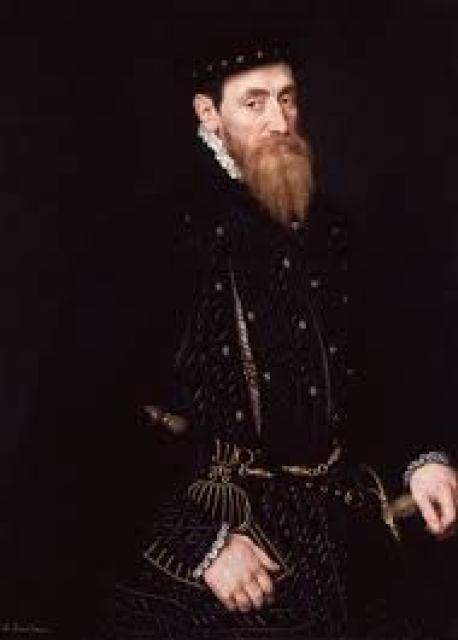
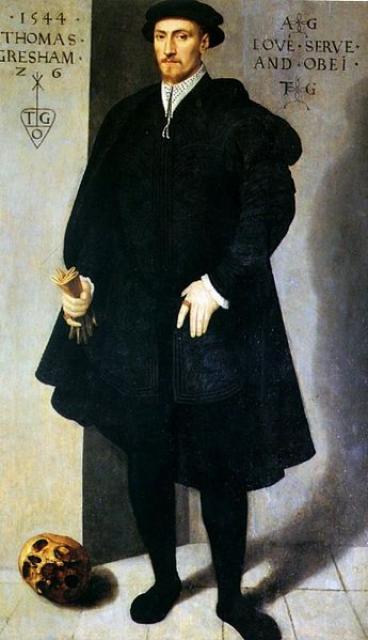
Thomas Gresham was an English merchant and financier who provided services to King Edward VI and his half-sisters, Queen Mary I and Queen Elizabeth I. He was born in 1519 in London and came from an ancient Norfolk family. Gresham was one of four children of Sir Richard Gresham, the prominent London merchant who also served as Lord Mayor.
Education and Early Career
Although his father wanted Thomas to follow in his footsteps, he sent him to study at Gonville and Caius College, University of Cambridge. However, details about Gresham's time at Cambridge are not well-documented. Gresham also spent eight years as an apprentice to his uncle, Sir John Gresham, who founded Gresham's School in Holt, Norfolk in 1555.
In 1543, Gresham was admitted to the Clothworkers' Company and traveled to the Low Countries, where he managed trade as an agent for his father and uncle. In 1544, he married Anne Fernley, the widow of London merchant William Read. While continuing to live and conduct business mainly in the Low Countries, Gresham played a significant role in managing finances and negotiating credits and supplies for King Henry VIII.
Financial Advisor to the Crown
In 1551, Gresham was called upon as a consultant to address the serious financial difficulties caused by the mismanagement of William Dansell, the royal merchant in the Low Countries. Gresham's clever, albeit somewhat unscrupulous, methods successfully increased the value of the pound sterling on the Antwerp exchange, leading to the repayment of most of King Edward VI's debts.
From then on, the government sought Gresham's advice for any monetary difficulties and often entrusted him with diplomatic missions. Although he received no salary, King Edward granted him land that generated an annual income of around £400. During the reign of Queen Mary I, Gresham temporarily lost favor, but he soon resumed his role as the financial agent for the Queen, negotiating credits, weapon supplies, and foreign goods.
Royal Exchange and Legacy
Gresham's salary during this time was 20 shillings per day, plus an annual income of £200 from church lands. When Queen Elizabeth I ascended the throne in 1558, Gresham retained his position and served as an ambassador at the court of Margaret of Parma. In 1559, he was knighted in recognition of his services.
In 1565, Gresham proposed the construction of the Royal Exchange in London, modeled after the Antwerp Bourse. The Clothworkers' Company provided the land, and Gresham financed the building from his own funds. The £700 annual rent he received from leasing the Exchange premises more than compensated for his efforts and expenses.
Gresham passed away unexpectedly on November 21, 1579, likely from a stroke. His only son had predeceased him, and his illegitimate daughter, Anne, married Sir Nathaniel Bacon, a local politician and Francis Bacon's half-brother. In his will, Gresham left a small sum for charitable purposes and bequeathed the majority of his estate, which consisted of London and nationwide land holdings generating over £2,300 per year, to his widow and her heirs.
Upon his wife's death, Gresham's house on Bishopsgate Street and the rent from the Royal Exchange were to be transferred to the City of London Corporation and the Clothworkers' Company to establish a college using the funds. Thus, Gresham College, the first higher education institution in London, was founded in 1597. Although it no longer admits students or confers degrees, the professors at Gresham College, both permanent and visiting, continue to deliver lectures open to the public.