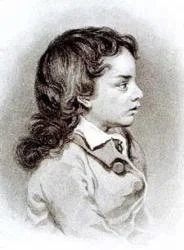
Thomas Hansen Kingo
Thomas Hansen Kingo was a Danish bishop and poet whose hymns gave Baroque intensity to everyday prayer. His verses move between the instability of earthly life and the promise of divine permanence, joining vivid language with a strong musical pulse. More than three centuries after his death, many of his songs remain part of worship in Denmark and Norway, securing his place among the most influential writers in Danish religious literature.
From Slangerup to the pulpit
Kingo was born on December 15, 1634, in Slangerup, a town northwest of Copenhagen. His father, Hans Kingo, was a Scottish-born linen weaver; his mother was Karen Sørensdatter. The family’s modest circumstances did not prevent Thomas from receiving a classical education. He attended grammar schools in Slangerup and Frederiksborg before studying theology at the University of Copenhagen, where he graduated in 1658.
After university, he worked as a tutor and then served in the Lutheran Church. He became an assistant minister at Kirke-Helsinge, pastor of his native Slangerup in 1668, and in 1677 bishop of the Diocese of Funen, with his seat in Odense. The bishop’s position brought administrative duties and pastoral travel, but he continued to write throughout his church career.
The poet of daily devotion
Kingo first attracted attention with occasional and patriotic verse. His lasting reputation, however, rests on hymns. In 1674 he published the first part of “Aandelige Siunge-Koor,” usually translated as “Spiritual Song Choir.” Its morning, evening and penitential songs brought the language of faith into the routines of home and family. A second part followed in 1681.
His hymns are shaped by the tension between human vulnerability and the eternal. Images of changing seasons, fading life and worldly vanity sit beside confidence in God’s constancy. Kingo’s forceful rhythms and memorable turns of phrase made his devotional writing work both on the page and in song. He also adapted familiar popular melodies for religious texts, seeking to draw listeners toward sacred themes through tunes they already knew.
A national hymnal
In 1683 King Christian V commissioned Kingo to prepare a new official hymnal for Denmark and Norway. The assignment proved politically and ecclesiastically complicated. The winter section appeared in 1689, but the final book was delayed and revised by a church commission. Published in 1699, the official collection contained about 300 hymns, including 85 by Kingo, and became known as “Kingo’s Hymnal.” Although the finished book did not include all that he had written or hoped to see included, it carried his work into churches across the kingdoms.
Kingo’s surviving output is larger than the hymnal alone. He wrote occasional poems for the royal court and other verse, but the hymns remain his central achievement. Their combination of vivid imagery, emotional conviction and disciplined form helped establish the Danish language as a powerful medium for religious poetry at a time when educated culture often looked to German and other European models.
Later life and legacy
Kingo spent his final decades as bishop of Funen, living in Odense and continuing his ecclesiastical work. He died there on October 14, 1703. Later Danish writers and hymn scholars praised the way he brought grandeur and simplicity together, making complex religious feeling direct and singable.
His place in Danish culture has endured through repeated editions of the national hymnal and through the continued performance of his songs. Kingo’s verses still accompany ordinary moments—morning, evening, grief, repentance and celebration—just as the first “Spiritual Song Choir” was designed to do. His legacy is not simply that of a church official who wrote poetry, but of a poet who made devotional language part of the sound of everyday life.