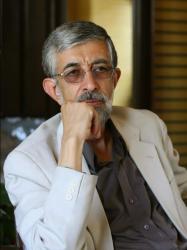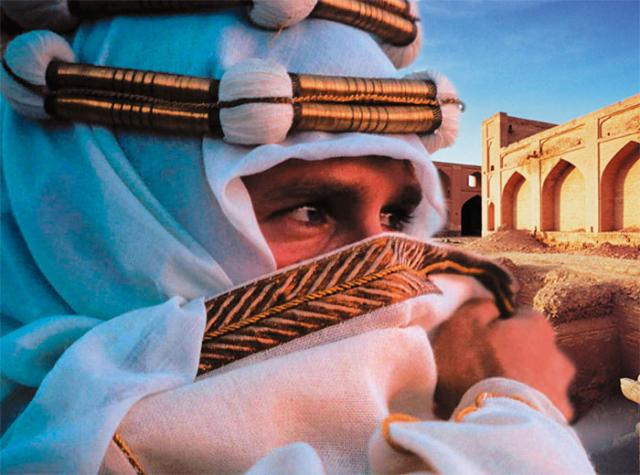
Thomas Lourens
 Great Britain
- Thomas Edward Lawrence: A British Military Legend and Scholar
- Military and Archaeological Career during World War I
- Post-War Activities and Writings
- Later Life and Legacy
Thomas Edward Lawrence: A British Military Legend and Scholar
Early Life and EducationThomas Edward Lawrence was born in Tremadog, North Wales, on August 15, 1888, as Thomas Chapman. His father was an Irish baron who later changed the family name to Lawrence. Lawrence spent his early childhood in Dinard, France, and from 1896 onwards lived in Oxford. He attended Oxford High School and subsequently enrolled in Jesus College, Oxford University, where he graduated with honors in history.
During university breaks in 1908-1910, Lawrence explored medieval castles in France and Syria, culminating in his first book, "Crusaders Castles" (published in 1936). From 1911 to 1914, he participated in archaeological excavations at Carchemish in Mesopotamia and in Egypt under the direction of prominent archaeologists.
Military and Archaeological Career during World War I
In 1914, Lawrence joined Lord Kitchener's "Survey of Sinai," which was a military intelligence project disguised as a topographical survey. He prepared the report "The Wilderness of Zin" (published in 1915). At the outbreak of World War I, he enlisted in the Arab Bureau in Cairo.
In 1916, Lawrence was dispatched to Mesopotamia to negotiate the surrender of the besieged British garrison at Kut. He later joined the Arab Liberation Army led by Prince Faisal of Mecca (later King of Iraq). Lawrence played a crucial role in disrupting the Turkish supply lines, leading to the Arab capture of Aqaba in 1917.
Lawrence experienced numerous hardships and injuries during the campaign, including a 2-month camel march and a period of torture and abuse while posing as a Circassian recruit in the Turkish army. He entered Damascus with British troops in 1918.
Post-War Activities and Writings
After the war, Lawrence declined an earldom and other honors but accepted a fellowship at All Souls College, Oxford. He attended the Versailles Peace Conference in 1919, where he unsuccessfully advocated for Arab independence and Jewish aspirations.
Lawrence dedicated himself to writing his magnum opus, "Seven Pillars of Wisdom," an eyewitness account of the Arab Revolt. He enlisted in the Royal Air Force as a private under the name "Shaw," but was outed by a fellow officer. In 1925, he returned to the RAF and privately published "Seven Pillars of Wisdom" in 1926. A condensed version, "Revolt in the Desert," was released in 1927.
Later Life and Legacy
Lawrence continued his military career, serving in the Royal Tank Corps and working on naval modernization in Southampton. He published his translation of Homer's "Odyssey" in 1932. In 1935, Lawrence was fatally injured in a motorcycle accident in Dorset.
Thomas Edward Lawrence remains a legendary figure in British history, known for his military exploits, archaeological contributions, and literary works. His life and character have been the subject of numerous books, films, and other works of art.