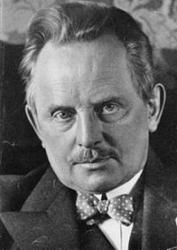
Thomas Midgley, Jr.
 USA
USA- Contributions to Automotive Industry
- Controversy of Tetraethyllead
- Development of Chlorofluorocarbons
- Recognition and Travesty
- Death and Legacy
Thomas Midgley Jr.: Engineer, Chemist, and Inventor of Controversial Substances
Thomas Midgley Jr., born on May 18, 1889, in Beaver Falls, Pennsylvania, was an American mechanical engineer and chemist. He played a pivotal role in the development of leaded gasoline and one of the first chlorofluorocarbons (CFCs).
Contributions to Automotive Industry
Midgley joined General Motors in 1916 and worked under Charles F. Kettering at the Dayton Research Laboratory. In 1912, he discovered that adding tetraethyllead (TEL) to gasoline prevented knocking in internal combustion engines. To avoid the negative connotation of lead, General Motors referred to TEL as "ethyl" in all reports and advertising. TEL became the industry standard for improving fuel performance.
Controversy of Tetraethyllead
Despite its popularity, TEL had severe health and environmental consequences. In 1923, Midgley took an extended leave of absence to recover from lead poisoning. By 1924, deaths and cases of lead poisoning at a Dayton plant led to the shutdown of TEL production in that city.
The production of TEL was transferred to a new plant in New Jersey, but similar incidents occurred. In a notorious press conference, Midgley denied the danger of TEL by washing his hands with it and inhaling its vapors. However, the New Jersey government ordered the plant closed, banning TEL production.
Development of Chlorofluorocarbons
In the late 1920s, General Motors' Frigidaire division sought non-toxic and non-flammable refrigerants for refrigeration and air conditioning systems. Kettering assembled a team including Midgley and Albert Leon Henne. They focused on alkyl halides, specifically compounds composed of carbon chains and halogens.
The team synthesized dichlorodifluoromethane (CFC-12) which became known as "Freon." Freon and other CFCs became ubiquitous as refrigerants and were also used in aerosol sprays and asthma inhalers.
Recognition and Travesty
Midgley received prestigious awards for his contributions, including the American Chemical Society's Nichols Medal (1922), the Priestley Medal (1941), and the Willard Gibbs Award (1942). He was also elected president of the American Chemical Society in 1944.
However, Midgley's legacy is marred by the negative environmental impact of TEL and CFCs. TEL has been linked to health problems and air pollution, while CFCs contribute to climate change and ozone depletion.
Death and Legacy
In 1940, Midgley contracted polio, leaving him paralyzed. He developed a system of pulleys and ropes to assist him out of bed. Tragically, in 1944, he became entangled in the ropes and died by asphyxiation.
Midgley's contributions to the automotive and refrigeration industries were significant, but his inventions also had unintended and harmful consequences for the environment and human health.