Tigran Petrosian
- Childhood and the road to the chessboard
- The champion who made defense an art
- A lasting presence in Soviet and Armenian chess
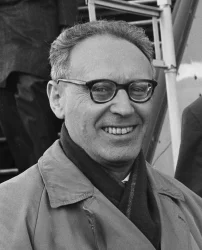
Born in Tbilisi in 1929 to an Armenian family, Tigran Petrosian grew into one of chess’s most formidable champions by making patience feel like a weapon. His reign as world champion lasted from 1963 to 1969, and his near-unbreakable defense earned him the enduring nickname “Iron Tigran.” Yet the label tells only half the story: beneath the careful safety-first approach was a sharp tactician, alert to the moment an opponent’s attack could be turned against them.
Childhood and the road to the chessboard
Petrosian’s youth was marked by hardship. He lost both parents while still young, and during the difficult war years he worked as a street cleaner at a Tbilisi officers’ club. Chess offered a new direction. He learned the game at the city’s Palace of Pioneers, where coach Archil Ebralidze encouraged a thoughtful, positional approach and introduced him to the ideas of José Raúl Capablanca and Aron Nimzowitsch.
The young player developed quickly. In 1945 he became champion of Georgia, and by 1947 he had earned the Soviet master title. He moved to Moscow around 1949–50, entering the center of Soviet chess and steadily rising through its demanding tournament circuit. In 1952 he became an international grandmaster. He won the Soviet championship four times—in 1959, 1961, 1969 and 1975—establishing himself among the world’s elite before his challenge for the crown.
The champion who made defense an art
Petrosian’s breakthrough came at the 1962 Candidates Tournament in Curaçao. He finished first without losing a game, securing the right to challenge reigning champion Mikhail Botvinnik. In 1963, he defeated Botvinnik 12½–9½ to become the ninth world chess champion.
Three years later he defended the title against Boris Spassky, winning their 1966 match 12½–11½. The return match in 1969 went the other way: Spassky won 12½–10½ and took the crown. Petrosian remained a serious contender afterward, competing in further Candidates cycles and returning to the Soviet championship podium.
His chess could look quiet until the position suddenly changed. He excelled at anticipating threats, removing an opponent’s attacking options before they became dangerous, and improving his pieces through patient maneuvering. He was also famous for the positional exchange sacrifice: giving up a rook for a bishop or knight when the resulting control, structure or pressure made the trade worthwhile. Such decisions demanded calculation as well as restraint. “Iron Tigran” was not simply hard to beat; he knew how to make defense create the conditions for a counterattack.
A lasting presence in Soviet and Armenian chess
Petrosian’s influence extended well beyond his title matches. He represented the Soviet Union at ten Chess Olympiads from 1958 to 1978, helping a powerhouse team maintain its dominance. He wrote about chess, analyzed games, and served as chief editor of the chess weekly 64. His work as an author and educator reflected the same methodical curiosity that shaped his play.
For Armenians, he became a source of lasting pride: a world champion born into an Armenian family in Tbilisi, whose achievements gave him a prominent place in the cultural history of Armenian chess. He remained active at the highest level well after losing the title, including a notable tournament victory in Tilburg in 1981.
Petrosian died in Moscow on August 13, 1984, aged 55. His legacy is visible in the generations of players who learned to value prevention, patience and precise timing alongside attack. He showed that a champion did not need to dominate the board with constant aggression; sometimes the most compelling move was the danger quietly prevented, followed by the sudden, perfectly judged strike.