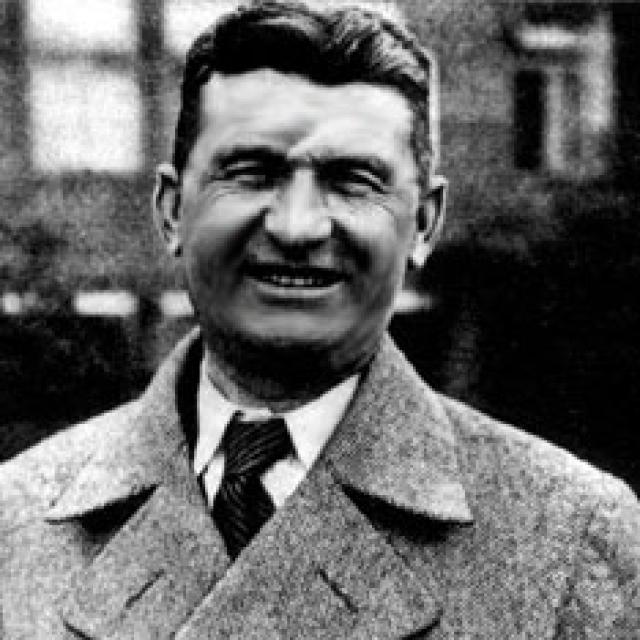
Tomash Batya
- Tomas Bata: The Shoe King
- Expansion and Innovation
- Wartime Opportunities
- Post-War Expansion and Social Initiatives
- Development of Zlín
- Global Ambitions
- Tragic Demise
- Legacy
- Postwar Developments
Tomas Bata: The Shoe King
Early Life and Business BeginningsBorn in Zlín on April 3, 1876, Tomas Bata hailed from a family of cobblers who had resided in the town since the 17th century. From a young age, he displayed commercial and organizational skills, pursuing orders for his father's shoemaking business.
In 1894, Bata and his siblings founded a family footwear firm, using an initial capital of 800 gold coins. They began with two modest workshops, acquired equipment and materials on credit, and employed 10 workers within a year.
Expansion and Innovation
Driven by Bata's ambitious nature, the company gradually expanded. In 1900, they moved into a new factory equipped with steam-powered machinery. By this time, they had become one of the eight largest footwear manufacturers in Bohemia.
Inspired by American production methods observed during a visit to the United States, Bata introduced assembly lines and specialized workers, significantly increasing productivity. He shifted the focus from felt footwear to canvas half-boots with leather soles, which became known as "Baťovky."
Wartime Opportunities
The outbreak of World War I presented Bata with an opportunity. He secured a military contract to supply leather boots, resulting in thousands of workers producing millions of pairs of shoes for the armed forces. He also produced low-cost wooden clogs for peasants.
Post-War Expansion and Social Initiatives
Foreseeing the potential for mass production, Bata established a network of company-owned stores. During the post-war economic crisis, he made a bold decision to reduce prices by 50%, attracting numerous customers and solidifying his position as the "Shoe King."
Despite his relentless focus on profits, Bata also cared for his workers, ensuring fair wages and benefits. He introduced "people's capitalism," allowing them to purchase shares in the company. He believed that a well-maintained workforce was essential for productivity.
Development of Zlín
Bata made significant contributions to his hometown. He constructed housing complexes, hospitals, cinemas, and sports facilities for his employees. He also established a vocational school, improved infrastructure, and set up businesses ranging from a movie studio to an aircraft manufacturer.
Global Ambitions
In the 1920s, Bata's shoe empire grew into a global enterprise, with factories and stores across Europe, Asia, and North and South America. He envisioned further industrial conquests and dreamed of expanding into the Russian market.
Tragic Demise
Bata's passion for aviation ultimately led to his untimely death. On July 12, 1932, he and his pilot crashed during a flight from Zlín to Switzerland, shortly after takeoff. He was 56 years old.
Legacy
Bata left behind a thriving business valued at half a billion crowns. His legacy continued through his half-brother, Jan Antonín Baťa, who managed the company after his death. By the outbreak of World War II, the "Baťa" brand had achieved international recognition.
Postwar Developments
In 1945, the Baťa factories in Czechoslovakia were nationalized, producing footwear for the Soviet Union under the "Svit" brand. After the Velvet Revolution of 1989, the name Zlín was restored, and the former Baťa enterprises were sold back to the founder's son, Tomas John Baťa. Today, "Baťa" remains a popular footwear brand in the Czech Republic, selling over 3 million pairs annually.


