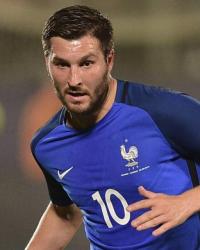
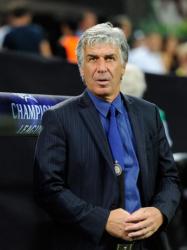
Tomislav Ivkovic
Tomislav Ivković’s career is remembered for a rare goalkeeping feat: he saved penalties from Diego Maradona twice, first in European club competition and later at the 1990 World Cup. Yet the story of the Zagreb-born goalkeeper reaches well beyond those famous duels. He won domestic trophies in Yugoslavia, earned an Olympic bronze medal, and became a coach who has spent decades working to develop the next generation of players.
From Dinamo to the National Team
Ivković was born in Zagreb on 11 August 1960 and came through the youth system at Dinamo Zagreb. He began appearing for the club’s senior side as a teenager and helped Dinamo win the Yugoslav Cup in 1980. After a short spell at Dinamo Vinkovci, he joined Red Star Belgrade in 1983. The move took him to one of Yugoslavia’s most powerful clubs, where he won both the league championship and the national cup in 1984.
His international career with Yugoslavia began in 1983. Over the next eight years, he collected 38 caps and represented the country at two Olympic Games. Yugoslavia reached the quarterfinals at the 1980 Moscow Olympics, then won bronze at Los Angeles in 1984. The Olympic medal stood among the high points of a generation of Yugoslav footballers who combined technical skill with intense competition for places.
Ivković played in several countries during the 1980s and 1990s, including Austria and Belgium, before spending his longest and most memorable club spell in Portugal. He joined Sporting CP in 1989 and played there for three seasons. He later remained in Portugal with Estoril, Vitória de Setúbal, and Belenenses, with a brief season at Spanish club Salamanca. The variety of clubs gave him experience in different football cultures and shaped a career that lasted around two decades.
The Maradona Penalties
Ivković’s most famous saves came against Maradona. In 1989, while playing for Sporting, he faced Napoli in the UEFA Cup. The tie went to penalties, and Ivković saved the Argentine star’s decisive kick. He later said that before the attempt he had challenged Maradona to a $100 wager. Maradona paid up and gave him his shirt.
The story repeated itself on a still bigger stage. At the 1990 World Cup in Italy, Yugoslavia met Argentina in a tense quarterfinal that finished 0–0 after extra time. Ivković saved Maradona’s penalty in the shootout, but Argentina advanced 3–2 after goalkeeper Sergio Goycochea stopped Faruk Hadžibegić’s final attempt. Ivković’s save became a lasting image of the tournament: one extraordinary moment that could not change the outcome of the match.
The match also showed the narrow margins in knockout football. Yugoslavia had reached the last eight and pushed the reigning champions through 120 minutes, but the shootout ended their campaign. Ivković would later say that he would have exchanged the personal satisfaction of stopping Maradona for a Yugoslav victory.
A Career in Coaching
After retiring as a player, Ivković moved into coaching. He began as an assistant at Sporting and later served as a goalkeeping coach for Croatia’s national team from 2004 to 2006. He also worked with clubs in the United Arab Emirates and Iran, and coached in Croatia with Međimurje and Lokomotiva Zagreb. He remained closely involved with Dinamo as well, the club where his professional story had begun.
In 2025, Ivković joined HNK Rijeka as an adviser to its youth academy and later became its head. The job has required him to assess young players, support coaches, and build a pathway from the academy to the first team. He has described it as one of the most demanding roles of his career, emphasizing that clubs must develop their own players and help their coaches improve.
Legacy
Ivković was a reliable goalkeeper whose career crossed several footballing worlds: Yugoslav champions, Portuguese clubs, the Olympic tournament, and the World Cup. His two saves against Maradona made him famous, but the broader record is one of resilience and reinvention. From teenager at Dinamo Zagreb to national-team goalkeeper, and later from coach to youth-development leader, he has remained committed to football long after his playing career ended.