Tongzhi
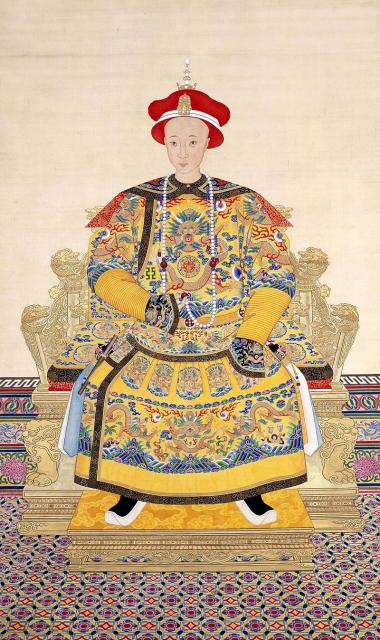
The Tongzhi Emperor (April 27, 1856–January 12, 1875), born Zaichun, was the ninth emperor of the Qing dynasty. He ascended the throne as a child in 1861 after the death of his father, the Xianfeng Emperor, and reigned until his own death at age 18. His era was shaped by the regency of his mother, Empress Dowager Cixi, and the effort to restore Qing authority after years of rebellion and foreign conflict.
Early life and accession
Zaichun was born in Beijing, the only surviving son of the Xianfeng Emperor and his consort Cixi. When his father died in 1861, Zaichun was five years old and became emperor. The reign title Tongzhi, meaning “joint order” or “united governance,” was adopted for his era.
A court coup in 1861 placed Cixi and the senior empress Ci’an in power as regents, working with Prince Gong and other senior officials. They governed in the young emperor’s name while he received a classical education and grew up within the highly structured world of the imperial court.
Reign and reforms
The Tongzhi era coincided with efforts to reassert Qing rule after the Taiping Rebellion and other uprisings. Court leaders supported the Tongzhi Restoration, a period of recovery and administrative reform. Officials including Zeng Guofan and Li Hongzhang helped rebuild state power, while the Self-Strengthening Movement promoted the acquisition of Western military technology and selected industrial and diplomatic reforms.
Tongzhi formally began to take a more active role in government in 1873, though power remained divided among the court’s senior figures. His short personal rule was marked by tensions over the direction of government and the costs of rebuilding imperial institutions.
Marriage and death
In 1872, Tongzhi married Lady Alute, who became Empress Xiaozheyi. He died in Beijing in January 1875, before producing an heir. Historical sources generally attribute his death to smallpox. His empress died soon afterward, and the succession passed to his cousin Zaitian, who became the Guangxu Emperor.
Historical significance
Because Tongzhi came to the throne as a child and died young, his reign was largely shaped by the regents and officials around him. The era nevertheless saw major attempts to restore the Qing state and adapt its military and administrative institutions to new pressures. The posthumous temple name Muzong is also used for him in historical records.