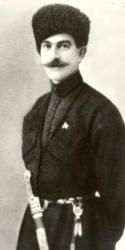
Ugo Cavallero
 Italy
Italy- Ugo Cavallero: Italian Military Leader and Politician
- Post-World War I and the Fascist Era
- Business and Political Life
- Involvement with Ansaldo and Criminal Allegations
- Return to Military Service and Relations with Germany
- Chief of General Staff and the Greek Campaign
- Reorganization of the General Staff
- Operation Hercules and Dismissal
- Imprisonment and Death
Ugo Cavallero: Italian Military Leader and Politician
Early Life and CareerUgo Cavallero was born on October 20, 1880, in Casale Monferrato, Italy. He pursued a military career, leveraging his abilities and connections to advance through the ranks during World War I.
Post-World War I and the Fascist Era
After the war, Cavallero led Italy's delegation at the Versailles Peace Conference. However, he resigned in protest over the perceived marginalization of Italy's demands. He also participated in the occupation of Fiume.
Business and Political Life
Cavallero retired from the military in 1920 but returned to active service after the Fascists came to power. He served as Secretary of the Ministry of War and as a senator.
Involvement with Ansaldo and Criminal Allegations
Cavallero became the top executive of the Ansaldo trust, a major steel and shipbuilding conglomerate. His business activities sparked controversy, culminating in a criminal investigation for embezzlement. However, his connections helped him evade prosecution.
Return to Military Service and Relations with Germany
In 1937, Cavallero was appointed Commander-in-Chief of Italian forces in East Africa. In 1939, he returned to Rome and was appointed Chairman of the Coordination Committee by Mussolini. In this role, he met with Hitler in Berlin, expressing pro-German sentiments.
Chief of General Staff and the Greek Campaign
Following the failed invasion of Greece, Cavallero was appointed Chief of General Staff and Italian commander in Greece. Despite significant military setbacks, he continued to insist on taking the offensive with limited success.
Reorganization of the General Staff
After the Greek campaign, Cavallero focused on reforming the General Staff, transforming it from an advisory body into the central command center of the Italian army.
Operation Hercules and Dismissal
In 1942, Cavallero proposed Operation Hercules, an ambitious plan to capture Malta. The operation was ultimately abandoned, and Cavallero was dismissed as Chief of General Staff in February 1943.
Imprisonment and Death
After Mussolini's overthrow, Cavallero was arrested by the Badoglio government. He was released by the Germans after the occupation of Rome. Despite being offered the chance to fight alongside the Germans, Cavallero refused. On November 14, 1943, Marshal Ugo Cavallero committed suicide.