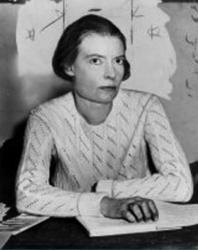
Vadim Deruzhinsky
 Belarus
- Valentin Deruzhinskiy: A Belarusian Journalist and Author
- Early Life and Career
- "Secret Research" Newspaper
- "Encyclopedia of Anomalous Phenomena" (2008)
- Deruzhinskiy's Assertions
- Belarusian Ethnic Origins
Valentin Deruzhinskiy: A Belarusian Journalist and Author
Valentin Deruzhinskiy is a Belarusian journalist and author who was born in Rostov-on-Don and has resided in Minsk since 1977.
Early Life and Career
After serving in the Strategic Missile Forces, Deruzhinskiy graduated from the Minsk State Pedagogical Institute of Foreign Languages. He worked as a translator in Bulgaria and as an advisor to the Analytical Department of the CIS Executive Secretariat in Minsk for five years.
"Secret Research" Newspaper
In 1998, Deruzhinskiy became the editor-in-chief and co-publisher of the "Analytical Newspaper 'Secret Research.'" He has authored numerous books on topics related to the unexplained and alternative history, including:
"Encyclopedia of Anomalous Phenomena" (2008)
"Conspiracy Theory" (2009)"Mysteries of Belarusian History" (2009)
"Forgotten Belarus" (2012)
Controversial Views
Some of Deruzhinskiy's statements regarding Russian and Belarusian culture and history, especially his views on the Grand Duchy of Lithuania, have sparked controversy. Critics have accused him of incompetence and unethical behavior.
Deruzhinskiy's Assertions
In his book "Mysteries of Belarusian History," Deruzhinskiy argued that:
What Russian authors now call "Russian" was once part of the Golden Horde.
The debate is between "Lithuanianism" and its Russian counterpart, "Hordism."
Russia attempted to assimilate Belarusians in the 19th century by imposing its "substrate culture" of Finno-Ugric and Turkic peoples, the social order of the Golden Horde, and eastern-style despotism, corruption, and legal chaos.
Belarus was never part of the Golden Horde and was instead a part of Western Civilization, with its cities enjoying Magdeburg Law for 400 years.
Ancient Finno-Ugric peoples in Russian films are depicted as "Slavs" but are dressed in Finnish clothing and footwear, suggesting a misrepresentation of Slavic identity.
Belarusian Ethnic Origins
Deruzhinskiy further posited that the modern Belarusian ethnic group is a blend of:
Lithuanians (originally Yotvingians and Dainavians from western and central Belarus)
Krivichians from eastern Belarus ("Belarusians," as they were known to the Muscovites)
He estimated that the present-day Belarusian ethnic group consists of 60-70% Lithuanians and only 20-30% Belarusians, a product of the mixing of Yotvingians and Krivichians. According to Deruzhinskiy, both Lithuanians-Belarusians and Krivichians-Belarusians are originally Balts, not Slavs. He also suggested that Lithuanians-Belarusians are related to the Mazurs of Poland and the Lusatian Serbs, while Belarusians are western Balts, and Russians and eastern Ukrainians are Slavicized Finns.