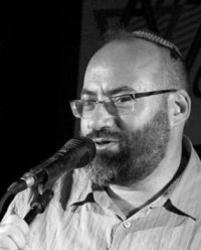
Vadim Egorov
 Russia
- Biography of Vadim Egorov
- A Bard Who Conquered the Iron Curtain
- The Birth and Resurrection of the Author's Song
- Inspiration and Influences
- And who were you actually imitating?
- A Beloved Song
- A Life on the Move
- The Evolution of Songs
- The Vitality of the Author's Song
Biography of Vadim Egorov
Vadim Vladimirovich Egorov, a Russian poet, bard, author, and performer, has traveled the world with his guitar. Whenever he travels abroad, he is immediately embraced by our compatriots, invited to embassies, trade missions, private homes, and eagerly awaited everywhere. He doesn't need any introduction - he steps onto the stage and is instantly recognized. This man honestly and talently does his job, which is why he has become beloved and famous nationwide. My interviewee today is the bard Vadim Egorov.
A Bard Who Conquered the Iron Curtain
Vadim, you were the first Russian bard to break through the cracked Iron Curtain in 1988. You have been to the United States six times, and once gave 42 concerts there in just a month and a half! And every concert was sold out. How did you feel during that time?
In the beginning, it was, of course, very strange. I remember when I first found myself in Manhattan, I constantly risked falling on my back - my head was spinning from the sight of the skyscrapers. I felt a puppy-like excitement back then, and now, when these trips have become normal, I am used to it. Almost all well-known bards have traveled to America, Israel, Germany...
Are there any differences between your listeners in Russia and the Russian-speaking American audience?
If we talk about the audience's reaction, then no, there are no differences. And how could there be? People meet bardic songs like fragments of their youth. And the attitude toward that time is the same for everyone: tender, warm, sentimental. The difference is that the American audience has become a bit... saturated, so to speak? No, not the right word. They have choices - that's the thing. When I first performed in the States, it was a full house. No wonder: a bard from Russia - wow! At that time, there was a craze for Russians. Now, Americans have the opportunity to go to the Bolshoi Theater, to a concert with stars, or to see me and Nikolai. But there is no fundamental difference between the listeners - they are all our people.
The Birth and Resurrection of the Author's Song
The author's song, starting with "Brigantine," was born during difficult times. It was held back and not allowed for a long time. During the Perestroika, there was a cultural explosion - life, simmering under stagnation, burst into free space, and cramped communal apartments were replaced by stadiums... and then came the rumor of the untimely death of the genre that had thrived for forty years...
It's not forty, but more! It all started much earlier than "Brigantine" - with Vertinsky, if we're being precise. As for the death of the author's song, the first person to voice that thought, surprisingly, was its founder - Okudzhava, who stated at the beginning of Perestroika that the author's song, as he had conceived it, had died. Of course, he was wrong. I think one of the reasons for the genre's resilience lies in its natural creative breath. The author's song has always been free from any forcedness, attachment to mass appeal, or money. As soon as you start thinking, "Will they like it, will they pay for it?" - it's the end of the song, and the end of all art. And yet, I was incredibly surprised when the bardic song revived again after the stadiums of the 80s and the rapid decline of the 90s... Although this decline was completely normal and predictable: at first, the people were captivated by the new wave of the unknown and forbidden, they switched to it, and then they got tired. Something similar happened during the Thaw era when crowds rushed to the Polytechnic Institute or the stadium... to listen to poetry! If you think about it, it's an unnatural thing that doesn't correspond to the place, mood, or purpose of poetry. The author's song, like poetry, is best perceived in solitude or in a very small audience, where the author envelops them with the capsule of his aura. But there won't be enough aura to envelop a stadium.
Inspiration and Influences
The author's song is closely connected to the Russian poetic tradition. Do you have a favorite poet with whom you feel a special connection?
It's probably pointless to try to single out one person, and listing the names of those whose work I admire would take too long. You know, I once formulated for myself: it doesn't matter if you have your own guru; it's more important to absorb everything you hear, see, and feel like a sponge, and allow this quintessence to spread throughout your body, becoming a voice... the soil on which your poems and songs will grow. Once, when I was still a boy, I wrote a quatrain: "I mature, I mature, / And tear off the rim of conventions, / I imitate everyone a little bit, / While not imitating anyone."
And who were you actually imitating?
Mostly Voznesensky. I had a wildly popular poem, "Dormitory," from the book "Vadim" - I still love it very much, although it is permeated with the intonations of the poet.
A Beloved Song
Among all your songs, do you have a favorite?If the Lord God were to tell me now, "Vadim, you know, it turned out that only one of your songs should remain, and the rest should disappear from the face of the earth" - I wouldn't choose any of the hits, not "Rain," not "Friends Are Leaving," not "Bathing," but "Don't Hurry" - a southern romance. I truly love this song as if it's not mine.
Don't hurry. Everything has its time.
Don't hurry me in anything.
Everything has its measure. No matter how you twist it,
one can't pull out a hundred from nine.
"A Hurry to Live," said the wise man.
I have learned this wisdom.
I believed it. I was in such a rush.
And what was the use?
And what was the use?..
A Life on the Move
Concerts and moving around take up a lot of time. Do you enjoy this nomadic lifestyle?
As I approached fifty, I suddenly became a terrible homebody. And yet, I always wanted to escape from home. From a good home, mind you: I have wonderful children; I fell in love with my wife at eighteen, married her at nineteen, and I still love her. Naturally, this love has taken on a different shade over time: the madness of the early years has turned into a peaceful flow. Despite all this, I constantly ran away from my family. To friends, to acquaintances, to any company. And now I feel so comfortable at home - with my books, my study, my wife...
The Evolution of Songs
Your songs are easy to sing and have become part of the repertoire of many performers. How do you feel when a song you created passes "into other hands"?
I have mixed feelings. A lot, of course, depends on the performer, but even with the wonderful Galya Khomchik, who sings my songs, not everything appeals to me.
The Vitality of the Author's Song
In your opinion, what is the most important thing about the author's song, the bardic lyrics, that determines its incredible resilience in today's harsh world?
The most important thing, in my opinion, is its deeply personal orientation. After all, we always sing about ourselves, our loved ones, and that will never get old. I love you, my rains,
My heavy autumn rains,
A little funny,
A little absent-minded -
I love you, my rains.
And the leaves cling to the trunks,
And the sidewalks are like mirrors,
And I float on the mirrors,
With no one to reflect...
Vadim Vladimirovich Egorov was born on May 7, 1947, in Eberswalde, GDR. His father was Vladimir Alekseevich Egorov, and his mother was Rebecka Iosifovna Gurevich. He graduated from a music school, specializing in the violin. He started writing poetry in 1961 and began writing songs based on his own lyrics in 1963. In 1969, he graduated from the V.I. Lenin Moscow State Pedagogical Institute with a degree in Russian language and literature. In 1976, he defended his dissertation in psychology and has authored several scientific papers. Since 1977, he has worked as the head of a department at the Institute of Defectology of the Academy of Pedagogical Sciences of the USSR. Vadim Egorov has released multiple albums, CDs, and books of poetry and songs. He currently resides in Moscow and has traveled abroad to Israel, Germany, Sweden, the United States, England, and Australia.