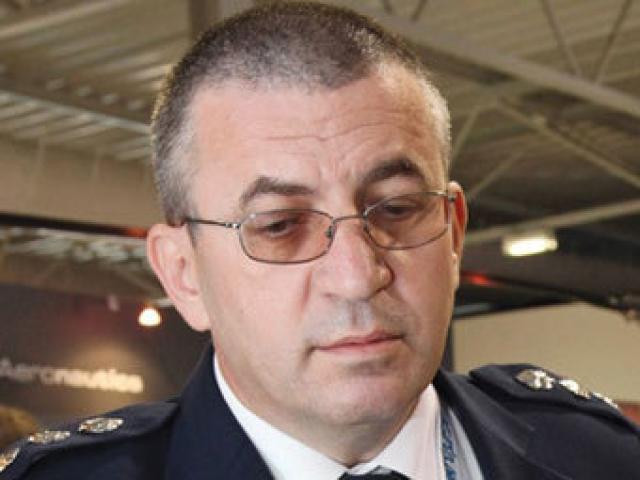
Vadim Leyderman
 Israel
Biography of Vadim Leiderman
Vadim Leiderman, a 49-year-old Israeli military attaché, was detained in Moscow and subsequently expelled from Russia on Wednesday, May 18th. He had served in this position for over two years before being suspected of espionage. The Israeli Ministry of Defense was the first to announce this information, followed by Israeli newspapers. According to Israeli journalists, Leiderman was arrested on May 12th at a Moscow café, where he was meeting with a Russian army officer. The arrest, as reported by "Haaretz," could be considered a violation of diplomatic immunity. Leiderman was interrogated by FSB officers for several hours before being given the traditional 48-hour period to leave Russia with his family. On May 14th, he arrived in Israel, where he had to explain himself to the Ministry of Defense and the Shin Bet - the Israeli Security Agency - and undergo a lie detector test.
Work in Russia
Not much is known about Leiderman's work in Russia. As he mentioned in an interview with the "Jewish newspaper," he immigrated to Israel from Moldova in 1977 at the age of 15. He later obtained a doctorate from the Technion - Israel Institute of Technology in Haifa and served as a member of the Israeli Air Force's technical squad. He also worked in the United States for several years in the field of air force operations. In 2008, Leiderman, who spoke fluent Russian, was appointed as the military attaché in Moscow. His term was set to expire in July 2011. As a diplomat, his responsibilities included monitoring official statements from the Kremlin regarding the defense complex and facilitating contacts between Russian authorities and Israeli arms suppliers.
Detention and Deportation
Leiderman's detention and deportation occurred against the backdrop of a visit to Russia by former Israeli Defense Minister Shaul Mofaz, accompanied by members of the Knesset Committee on International Relations and Defense. Two separate investigations conducted by Israeli security agencies yielded the same result: the Russian accusations against Leiderman were unfounded. Although the official authorities kept the diplomat's deportation a secret until the investigation was completed, Israeli media managed to uncover the impending scandal. On May 19th, unofficial statements from Moscow appeared in the media, with an unnamed Russian intelligence officer asserting that Leiderman was actively promoting certain Israeli weapons manufacturers in the Russian market, and his alleged activities amounted to industrial espionage. The Russian Ministry of Foreign Affairs issued an official statement on Thursday, stating that Leiderman had been arrested red-handed while receiving secret information from a Russian citizen and was declared persona non grata and expelled from the country.
Speculations and Consequences
Israeli high-ranking officials assured journalists that there would be no significant consequences from the arrest of the military diplomat. The official position of Jerusalem refrained from making strong statements against Russia. Newspapers were left to draw conclusions from the limited disclosed information. Some journalists concluded that even if Leiderman was indeed involved in gathering secret information, his activities did not pose a threat to Russian security since he was expelled instead of being charged and prosecuted. Yakov Kedmi, an expert on Israeli-Russian relations, suggested in an interview with "Yedioth Ahronoth" that Leiderman's arrest was a result of rivalry between the GRU and the FSB. According to Kedmi, when GRU specialists learned about the diplomat's meeting with a Russian military officer, they decided to arrest him, even without substantial evidence of espionage, merely to demonstrate their effectiveness. The FSB could not fall behind and played along with their GRU colleagues by hinting to other Russian officers not to meet with foreign diplomats without obtaining permission from the authorities.
Another version, reported by Globes, suggests that Russian intelligence agencies tried to recruit Leiderman as a double agent, and his deportation was a response to his refusal to cooperate. In the wake of Leiderman's deportation, Israeli media recalled other diplomatic-spy conflicts between Russia and Israel, such as the arrest in December 1995 of Mossad representative Reuven Dineli, who was suspected of buying satellite images from Russian officers. Dineli was expelled to his homeland, and his accomplices were accused of disclosing state secrets. Dineli's deportation was preceded by intense interrogations by the FSB, which, according to the Israeli side, included physical violence.
Most likely, the deportation of the diplomat will not have significant international consequences. It is possible that his successor will arrive in Russia earlier than planned if Israel has not changed its candidate for the position of military attaché. Compared to the Dineli case, the expulsion of Vadim Leiderman does not carry the same weight. At most, it can be considered a spy mishap. The most intriguing question at the moment is who the officer was that handed secret information to the Israeli attaché and what consequences await him for being caught in the act.


