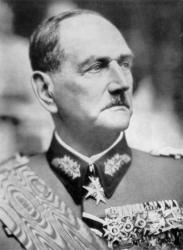
Vasiliy Flug
 Russia
- Vasily Fluh: A Distinguished Military Career
- Military Service
- Russo-Japanese War
- Governor and Division Commander
- World War I
- Russian Civil War and Emigration
- Later Years and Death
Vasily Fluh: A Distinguished Military Career
Early Life and EducationVasili Yegorovich Fluh was born in 1860. He received his military education at the 2nd St. Petersburg Military Gymnasium, Mikhailovsky Artillery College, and Nikolaev Academy of the General Staff, which he graduated from in 1890.
Military Service
Fluh's military service began in the 7th Horse-Artillery Battery. After graduating from the academy, he was appointed chief of the operations department of the Vladivostok Fortress staff. In 1896, he joined the General Staff in the Far East.
From 1899 to 1900, Fluh served as staff officer for the 2nd East Siberian Rifle Brigade. In 1900, he became acting chief of staff of the 3rd (Port Arthur) East Siberian Rifle Brigade and participated in the Boxer Rebellion in China. He received the Golden Weapon for his capture of the city and fortress of Lutai.
Russo-Japanese War
During the Russo-Japanese War, Fluh served as quartermaster general to the Viceroy of the Far East and later as quartermaster general of the 2nd Manchurian Army. He was promoted to major general in 1903 and lieutenant general in 1908.
Governor and Division Commander
After the war, Fluh became military governor of the Primorsky Region and ataman of the Ussuri Cossack Host. In 1909, he took command of the 37th Infantry Division. In 1912, he commanded the 2nd Guards Division and served as assistant to the Governor-General of Turkestan.
World War I
Fluh was promoted to general of infantry in 1914. During World War I, he led the 10th Army but was dismissed due to "dangerous activity." Later, he commanded the 2nd Army Corps and the 9th Army, earning the Order of St. George for his role in the Brusilov Offensive.
Russian Civil War and Emigration
In 1917, Fluh joined the Volunteer Army and was secretly sent to Siberia to organize the White Movement. He served as war minister in the "All-Russian Government" formed in Vladivostok and later returned to Southern Russia under General Denikin. In 1919, he became assistant for military affairs to the governor-general of the Kiev region.
After the evacuation of Crimea, Fluh emigrated to the Kingdom of Serbs, Croats, and Slovenes. In 1922, he joined the War Ministry in Varaždin. He wrote extensively on military affairs and served in the Russian General Military Union.
Later Years and Death
During World War II, Fluh went to Germany and later to the United States. He passed away in San Francisco in 1955.