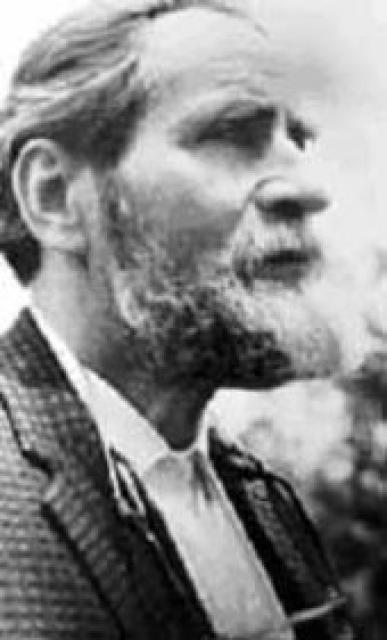
Vasiliy Planskiy
 Ukraine
- Early Life and Career
- Literary Debut and Criticism
- Further Education
- World War II and Its Aftermath
- Internment and Travail
- Exile and Struggles
- Literary Contributions
- Recognition and Later Life
- Health Declines
- Legacy and Impact
Early Life and Career
From Cossack RootsThe Ukrainian poet, prose writer, and religious thinker was born into a Cossack family. In 1927, he graduated from the Lubensky Pedagogical College and worked as a teacher in a mining village in Donbas.
Literary Debut and Criticism
In 1929, he made his literary debut with the support of Pavlo Tychyna. However, the publication of his first book of poetry in 1930 sparked ideological criticism, accusing him of "bourgeois nationalism" and "religious remnants."
Further Education
He transferred from the Krasnodar Pedagogical Institute to the graduate program at the Moscow Pedagogical Institute. In 1940, he successfully defended his dissertation on the realistic and fantastic elements in Dante's "Divine Comedy."
World War II and Its Aftermath
Frontline ServiceIn 1941, he volunteered for the front in World War II. In 1942, he was severely wounded and ended up in occupied territory.
Internment and Travail
After recovering, he worked as a proofreader for a newspaper. In 1943, he was sent to Germany. After the war, he ended up in a displaced persons camp in Augsburg.
Exile and Struggles
In 1947, he moved to France and later to the United States in 1950. He worked for Radio Liberty, struggling financially. He was forced to accept odd jobs as a stoker and window cleaner.
Literary Contributions
Amidst his hardships, he wrote articles on literary history and religious essays. He became close to the New York Group of Ukrainian poets.
Recognition and Later Life
Literary AccoladesHe is featured in four literary encyclopedias: two Ukrainian (Kyiv, Toronto), one Russian (Moscow), and one American (Princeton). He was a recipient of the Shevchenko Prize and the All-American Small Press Contest for Nature of Poetry.
Health Declines
In his later years, he suffered from serious illness, including a stroke, partial blindness, and paralysis.
Legacy and Impact
He authored a vast body of work, including poetry, epic and dramatic poems, novels, literary studies, and religious-philosophical essays. He translated Dante, Shakespeare, and the Apocalypse. His prestigious works include "The Yellow Prince" published in Paris (in French) and twice in Moscow.




