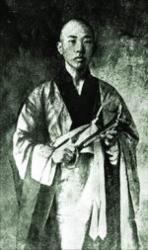
Vasiliy Trediakovskiy
 Russia
- Emergence of a Literary Luminary
- Intellectual Odyssey
- Return to Russia and Literary Breakthrough
- Literary Reform and Academic Recognition
- Scholarly Endeavors
- Theoretical Disputes and Controversies
- Personal Tribulations and Legacy
Emergence of a Literary Luminary
Birth and Early LifeVasily Kirillovich Trediakovsky, born on February 22 (March 5), 1703, in Astrakhan, Russia, was the son of a priest. Despite his father's aspirations for him to enter the priesthood, young Trediakovsky followed a different path. He initially attended a Catholic school run by Capuchin monks before serving as a church official.
Intellectual Odyssey
In the early 1720s, Trediakovsky abandoned his clerical duties and embarked on a literary and educational journey. He traveled to Moscow, where he studied at the Slavic-Greek-Latin Academy from 1723 to 1726. Inspired by his passion for knowledge, he ventured abroad, residing in the Hague as the secretary to the Russian ambassador and later studying at the Sorbonne in Paris from 1727 to 1730.
Return to Russia and Literary Breakthrough
Upon his return to Russia in 1730, Trediakovsky immersed himself in literary pursuits. His translation of Paul Talman's novel, "Journey to the Island of Love," alongside his own love poems, gained him widespread recognition for their straightforward language. His popularity propelled him into the ranks of leading Russian writers.
Literary Reform and Academic Recognition
In 1735, Trediakovsky addressed the Academy of Sciences, advocating for a transformative approach to Russian versification. His treatise, "New and Concise Method for Composing Russian Verses," outlined a new system of versification, the syllabo-tonic system, based on the regular alternation of stressed and unstressed syllables. This innovation paved the way for the enduring legacy of Russian poetry. His contributions were further cemented by his appointment as an Academician in 1745.
Scholarly Endeavors
Trediakovsky's intellectual curiosity extended beyond literature. In 1748, he published "Discourse on Orthography," pioneering the study of Russian phonetics. His "Treatise on the Russian Language" and "Introduction to the Languages" showcased his linguistic expertise.
Theoretical Disputes and Controversies
Trediakovsky's literary opinions often placed him at odds with his contemporaries. His preference for syllabic poetry in "On Ancient, Middle, and New Russian Verse" faced resistance from Mikhail Lomonosov and Alexander Sumarokov, who championed the syllabo-tonic system. Furthermore, his religious writings, including the philosophical poem "Theophany" and his versification of the Psalms, faced criticism and remained unpublished during his lifetime.
Personal Tribulations and Legacy
In 1759, Trediakovsky was dismissed from the Academy. Undeterred, he continued his literary work, translating historical texts. His contributions to Russian literature were fully appreciated only after his death on August 6 (17), 1768, in St. Petersburg. Alexander Radishchev and Alexander Pushkin later recognized his profound influence on the development of Russian poetry and language.