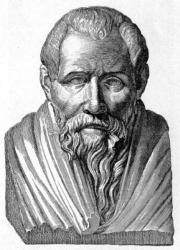
Viacheslav Artemov
 Russia
- Early Life and Education
- Academic Career
- MSU and MGLA
- Research Interests
- Freedom and Morality in Russian Anarchism
- Cultural Strategy for Freedom
Early Life and Education
Vyacheslav Mikhailovich Artemov was born in Kirovo, Donetsk Oblast, Ukraine. He graduated from the Faculty of Philosophy of Moscow State University (MSU) in 1980 and completed his postgraduate studies at the same faculty in 1983.
Academic Career
Early CareerFollowing his postgraduate studies, Artemov taught at various philosophical departments, including the All-Union Correspondence Institute of Civil Engineering, the Gorlovka State Institute of Foreign Languages, and the Moscow State Open Pedagogical University.
MSU and MGLA
In 1996-1998, Artemov was a leading research fellow at the Department of Ethics at MSU's Faculty of Philosophy. From 1998 to 2000, he served as an associate professor at the Department of Philosophy of the Moscow State Law Academy (MGLA). In 2000, he became a professor at MGLA's Department of Philosophy.
Research Interests
Artemov specializes in the history of philosophy and ethics. His doctoral dissertation, defended in 1999, was titled "Freedom and Morality in Russian Classical Anarchism."
Freedom and Morality in Russian Anarchism
Artemov's research focuses on the relationship between freedom and morality in Russian classical anarchism, particularly the ideas of Mikhail Bakunin, Pyotr Kropotkin, and Leo Tolstoy. He argues that the moral influence of the individual is crucial for expanding freedom and overcoming social obstacles to individual and societal development.
Cultural Strategy for Freedom
Artemov proposes a strategy for fostering a culture of freedom, emphasizing the role of teachers and collaboration among different societal groups to promote spiritual and moral progress in Russian society. He advocates for the prioritization of values such as morality, freedom, labor, justice, and truth, believing that their realization will lead to social harmony and self-organization.