Vikky Alexander
 Canada
Vikky Alexander: A Canadian Artist
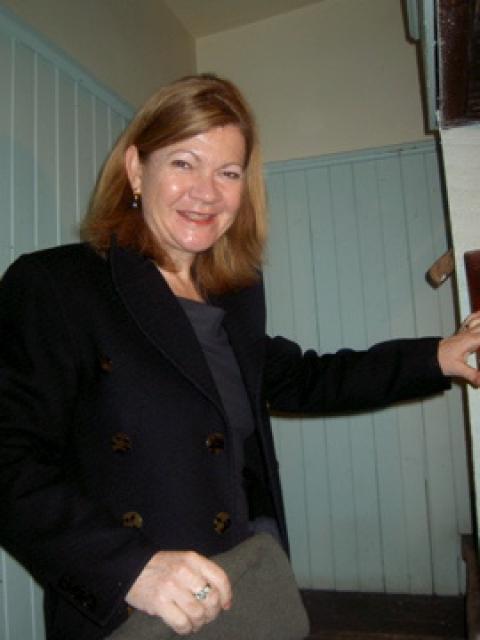
Vikky Alexander, a Canadian artist, photographer, and performer, hails from Vancouver, British Columbia. Starting her professional artistic career in the early 1980s, she became one of the brightest representatives of the Vancouver School and the creator of her own aesthetics of photography and art in general. For Vikky Alexander, all art created by humans is an aspiration to change life and the world for the better, and to showcase it from a perspective that often eludes the eyes of outsiders.
In her works, she raises questions about the rationality of contemporary ideals, as well as analyzes the relationship between the modern world and nature, which is often seen by artists as something subordinate to humans and completely dependent on their destructive actions. However, in this clash between ordered chaos and eternal chaos, nature often emerges victorious, leaving humans to find new ways to subdue natural chaos and momentarily tame it. At the same time, some of Vikky's works, following the movements of the brushes of romantic artists, touch the deepest emotions of the viewer, transforming them from ordinary observers into direct participants in the artwork and inevitably in life.
Biography
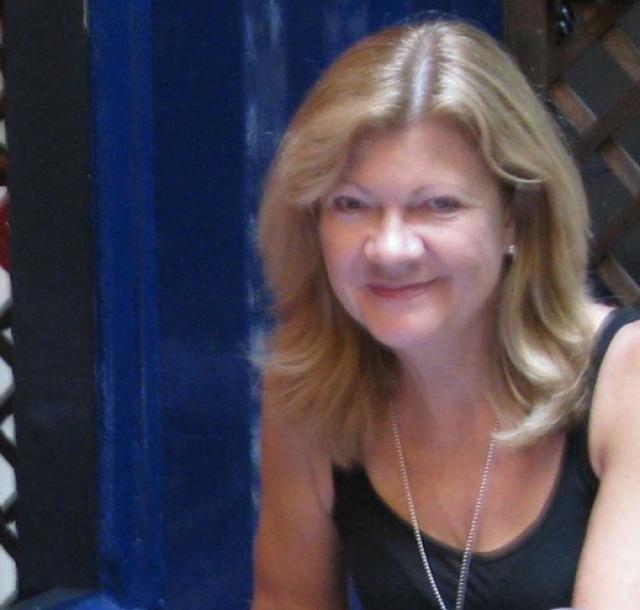
Vikky Alexander was born on January 30, 1959, in Victoria, British Columbia. After finishing school, she enrolled in the Nova Scotia College of Art and Design, where she professionally studied photography. Over time, her interests began to shift, and elements of architecture and sculpture started to appear more frequently in her works, which led to the transformation of her original photography into almost three-dimensional art.
Her early techniques leaned towards appropriation, a style in which real objects or previously created artworks occupy a central place in the artwork. This direction is often compared to the pop art movement, which gained popularity in America and later found success worldwide. During the appropriation era, Vikky's works, along with the works of other North American artists, were considered innovative and modernist.
Since 1992, Alexander has held the position of professor in the Department of Visual Arts at the University of Victoria in Canada. Her later works, which garnered significant attention in the art world, embody different techniques that have become closely intertwined with the development of modern technologies. Most of her works undergo processing in graphic editors before being printed on canvas. The mood of her paintings and photographs has also changed: they increasingly find themselves at the intersection of fantasy and reality. The pursuit of truth and originality is no longer her main goal; instead, new aesthetic ideals have emerged - a convergence towards previously established ideals and an awareness of hidden spiritual ideals through their embodiment.
Equally intriguing are the works in which Vikky compares the concepts of personal and public. Through the mass production of company merchandise - business cards, postcards, and even t-shirts - individuals express themselves while unintentionally remaining within a specific corporate environment. Alongside other artists, Alexander has created prototypes of products that equally represent the interests of corporations and consumers. According to the artists, this perspective fosters mixed relationships between the client, designer, and company, while also bringing clarity to the psychological and ethical aspects of such collaborations.
Vikky's works with mirrors have brought her considerable fame. For instance, in the piece "Lake of the Woods," it is only through the reflection in the mirror that the viewer can fully encompass the immense idyllic landscape. Through this perspective, according to exhibition curators, visitors are presented with the view of how nature loses its reality and becomes merely a synthetic reflection through the refraction in the mirror.