Viktor Bolhovitinov
- Early Life and Education
- Academic Career
- Aircraft Design
- Heavy Bomber DB-A (1934-36)
- Interceptor Fighter "S" (1939)
- Rocket Fighter BI-1 (1941-42)
- Later Career
- Recognition and Honors
- - Two Orders of Lenin
Early Life and Education
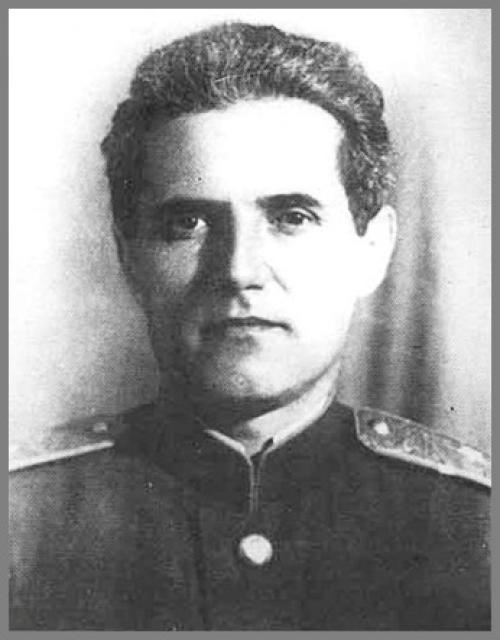
Victor Fedorovich Bolhovitinov was born on February 4, 1899, in Saratov, Russia. In 1926, he graduated from the N. E. Zhukovsky Air Force Academy and subsequently pursued a doctorate in aeronautical sciences.
Academic Career
Bolhovitinov joined the faculty of the N. E. Zhukovsky Academy in 1926. In 1937, he became the Head of the Department of Military Aviation Engineering.
Aircraft Design
Bolhovitinov's significant contributions included the design of the following aircraft:
Heavy Bomber DB-A (1934-36)
Under Bolhovitinov's leadership, the DB-A heavy bomber was developed. It set two international records in 1936, and was later used as a transport aircraft.
Interceptor Fighter "S" (1939)
The "S" interceptor was a unique aircraft featuring two engines with coaxial propellers. It achieved a speed of 570 km/h during testing.
Rocket Fighter BI-1 (1941-42)
Bolhovitinov oversaw the design of the BI-1, the first rocket fighter in the Soviet Union. Its maiden flight in 1942 marked the beginning of soviet jet aviation.
Later Career
Bolhovitinov became a professor and Doctor of Technical Sciences. He authored numerous publications on aviation technology. In 1943, he was promoted to General-Major of the Engineering and Aviation Service.
Recognition and Honors
Bolhovitinov received numerous awards for his contributions, including:
- Two Orders of Lenin
- Two Orders of the Red Banner- Order of the Red Star
- Honored Scientist and Engineer of the RSFSR
Legacy
Victor Fedorovich Bolhovitinov died in Moscow in 1970. His innovative designs and pioneering work in aviation science continue to inspire generations of engineers and pilots.