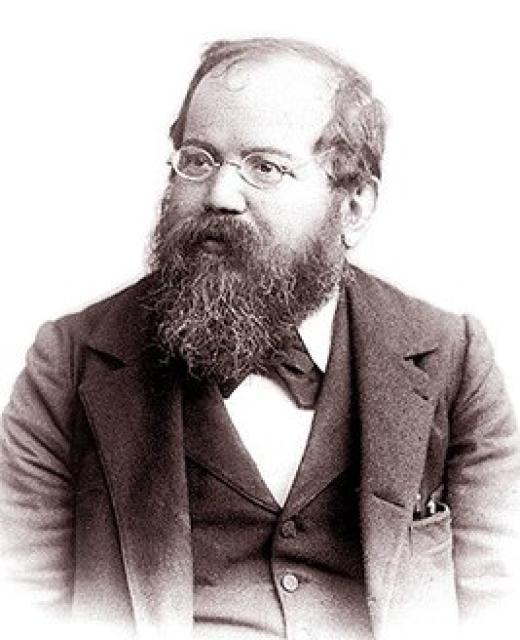
Vilgelm Steinitz
 USA
USA- Wilhelm Steinitz: The First World Chess Champion
- Early Life and Chess Beginnings
- The Journey to Becoming World Champion
- Contributions to Chess Theory
- Later Years and Legacy
Wilhelm Steinitz: The First World Chess Champion
Wilhelm Steinitz, a German chess player, entered the history of chess as not only the first chess champion of his time but also as the founder of a doctrine that became a turning point in the development of the game. He outlined his concept of positional school in his works "The Modern School and Its Traditions" and "Morphy and the Chess Game of his Time," which were published in the "International Chess Magazine" (1885).
Early Life and Chess Beginnings
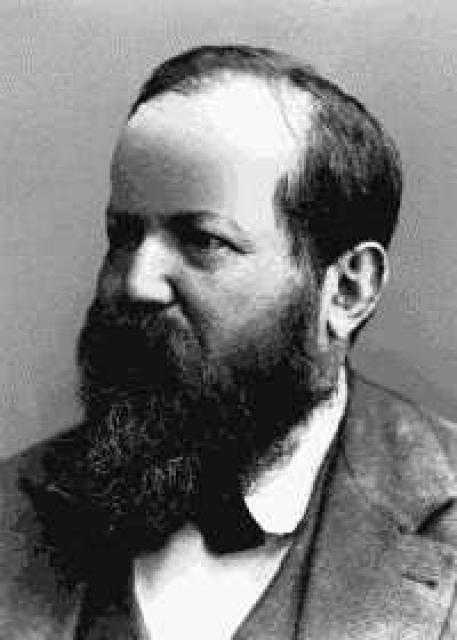
Born in Prague in 1836, Wilhelm Steinitz was the thirteenth child in his family. He experienced extreme poverty during his childhood and youth, and it was only through the dedication of his loved ones that he had any hope of achieving success in life. Steinitz first encountered chess as a child when he saw a set displayed in a shop window. His father explained the game to him, mentioning that it was an ancient game played by wise individuals. Due to their financial circumstances, Steinitz made his first chess set out of cardboard and begged his father to teach him how to play.
Chess quickly became a significant part of Steinitz's life. However, it wasn't until his years of study that he truly became passionate about the game. He started attending the Vienna City Chess Club and participating in club tournaments, quickly becoming a formidable opponent. In the 1861 club championship, he scored thirty points out of a possible thirty-one, establishing his dominance. While his early victories were met with little enthusiasm, over time, the club members grew to recognize his talent and potential.
The Journey to Becoming World Champion
When an invitation arrived for the strongest Austrian chess player to participate in the Second International Tournament in London, Steinitz was selected. In 1862, he faced some of the best chess players in Europe, including Adolf Anderssen, Ludwig Paulsen, Serafino Dubois, Johann Löwenthal, John Owen, Thomas Barnes, Joseph Blackburne, and others. Unfortunately, his performance did not live up to expectations, finishing sixth overall with only a prize for the most beautiful game in the tournament. Despite the setback, Steinitz remained determined to achieve his goal.
Deciding to leave his studies behind, Steinitz settled in London and embarked on the challenging path of a professional chess player. His immediate goal was to become the world champion. Over the next year, Steinitz defeated all the leading English chess players, including Joseph Blackburne, Samuel Boden, Adolf Mongredien, and Richard Green, winning first prizes in two club tournaments. Some opponents, like Ignaz von Kolisch, Ludwig Paulsen, and Ignác Kolisch, declined to play against him. With no challengers left, the English chess clubs directly approached Anderssen, asking if he would be interested in facing the new English champion.
Anderssen, known for his fearlessness and eagerness to play, accepted the challenge. In their match in London, Steinitz emerged victorious with a score of 8-6. Finally, it seemed that Steinitz had achieved his main goal and could rightfully be called the strongest chess player in the world. However, there were still other talented masters who aspired to claim that title, including Anderssen's student Johann Zukertort, experienced players such as Ludwig Paulsen and Henry Bird, and the young Joseph Blackburne.
In order to prove himself as the strongest, Steinitz knew he would have to defeat each of them. In a series of challenging matches, Steinitz first defeated Henry Bird (9.5-7.5), then Joseph Blackburne (5.5-0.5), and finally Johann Zukertort (9-3). Steinitz's victories solidified his position as the world champion, and his teachings and theories started gaining wider acceptance among the chess community.
Contributions to Chess Theory
Steinitz's critical analysis of his own games, as well as those of his contemporaries and predecessors, led him to important conclusions. He emphasized that while combination play, popularized by Morphy and Anderssen, could bring success, it was not always the most reliable strategy. Steinitz introduced the concept of a well-founded attack and cautioned against premature and incorrect attacks. According to him, it was crucial to establish multiple small advantages before launching an attack, as such an approach had a higher chance of success.
These small advantages included a developmental edge, central control, a weak position of the opponent's king, weak squares in the enemy camp, optimal pawn structure, ownership of open lines, and the advantage of having two bishops over two knights or a bishop and a knight. Some of these advantages were temporary in nature, while others, such as pawn structure, king position, and the two-bishop advantage, were more enduring. Steinitz also stressed the importance of the king's role in the game and demonstrated how an active king could influence the outcome of a match.
While Steinitz's conclusions faced initial skepticism, they eventually gained widespread acceptance. Today, his teachings are considered fundamental principles in chess theory.
Later Years and Legacy
Following his victory over Zukertort in the title match, Steinitz defended his championship three times, defeating top challengers such as Mikhail Chigorin, Isidor Gunsberg, and the young Siegbert Tarrasch. However, in 1894, he was dethroned by Emanuel Lasker.
Despite losing his title, Steinitz's contributions to the game of chess and his influence on future generations cannot be overstated. He paved the way for the development of modern chess strategy and left a lasting legacy. Wilhelm Steinitz will always be remembered as the first official world chess champion and the founder of the positional school of chess.