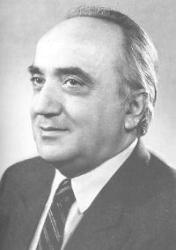
Vladimir Balashev
 Russia
- Early Life and Education
- Monarchist Activities
- All-Russian Congresses
- Conflict with Protopriest Vostorgov
- Alliance with Dubrovin
- Later Life and Legacy
Early Life and Education
Alexander Vasilyevich Balakleev was born into a noble family in Moscow. He became a prominent figure in the far-right monarchist movement in the city. Balakleev received a legal education and became a sworn attorney, specializing in criminal law. In addition to his legal practice, he was also a poet, publicist, and publisher.
Monarchist Activities
Balakleev played a key role in the organization and activities of numerous monarchist organizations in Moscow. He was a founding member of the Russian Monarchist Assembly and the Russian Monarchist Party. When the latter transformed into the Russian Monarchist Union, Balakleev joined its ranks. He also participated in the Russian Assembly and attended the First All-Russian Congress of Russian People in St. Petersburg in 1906.
All-Russian Congresses
Balakleev actively participated in subsequent All-Russian Congresses of Russian People. He helped establish the All-Russian Union of Russian People and served as its organizer. He also attended the Second All-Russian Congress of Russian People in Moscow in 1906 and the Third All-Russian Congress of Russian People in Kiev in 1906, representing various monarchist organizations. At the Third Congress, he was elected to a commission tasked with unifying all monarchist organizations.
Conflict with Protopriest Vostorgov
Balakleev became an ardent opponent of Protopriest Iliodor Vostorgov, the successor of Vasily Grinmut, who led the Russian Monarchist Union. Balakleev's newspaper, "The Voice of the Russian," launched a campaign of attacks against Vostorgov, dubbing him "Gapon No. 1." This led to Balakleev's departure from the Russian Monarchist Union.
Alliance with Dubrovin
Balakleev aligned himself with Alexander Ivanovich Dubrovin and the Union of the Russian People (URP). He attended the Yaroslavl Conference in 1909 and was elected as its secretary. Balakleev remained loyal to Dubrovin after the URP split. He represented the Tula branch of the URP at the Fifth All-Russian Congress of the URP in Moscow in 1911 and was elected as secretary of the congress and an honorary member of the organization.
Later Life and Legacy
Balakleev continued to support the far-right movement and urged the expulsion of his opponents. During World War I, he served in the military. After the Russian Revolution, he fled Russia and lived in an emigrant camp in Serbia in 1920. His fate after that is unknown. Balakleev published several works, including "Patriotism in Native Poetry," "Why Gapon Needs Field Trips," and "The Influence of Freemasonry on World Politics."