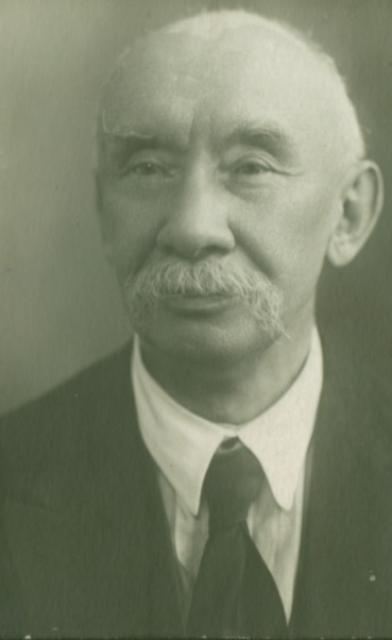
Vladimir Kurbatov
- Historian, Architect, Chemist, Engineer
- Artistic Collaborations and Academic Career
- Chemical Warfare and Industrial Development
- Historical Preservation and Artistic Patronage
- Arrests, Release, and Later Years
Historian, Architect, Chemist, Engineer
Early Life and EducationVladimir Yakovlevich Kurbatov, a multifaceted scholar, was born into a family filled with loss. His father passed away early, leaving his mother, Maria Alexandrovna, to care for three young children. Kurbatov spent his childhood and adolescence in Pavlovsk, where he excelled academically. He graduated from the prestigious 7th St. Petersburg Gymnasium with a gold medal in 1896.
Pursuing his passion for science, Kurbatov enrolled in the Physics and Mathematics Faculty of St. Petersburg University. During his studies, he supported his education through private tutoring and other employment. Upon graduating in 1900, he worked at the Main Chamber of Weights and Measures under the esteemed chemist Dmitri Mendeleev. Subsequently, he joined the chemistry laboratory at St. Petersburg University.
Artistic Collaborations and Academic Career
Kurbatov's interests extended beyond science. From 1899 onwards, he collaborated with renowned Russian artists such as Ilya Repin, Valentin Serov, and Ivan Levitan. He also immersed himself in music, acquainting himself with composers Alexander Glazunov and Nikolai Rimsky-Korsakov.
In 1908, Kurbatov began teaching at the Technological Institute. He received a professorship in 1922. His academic contributions included establishing the Department of Physical Chemistry, which he led for over 50 years, and the Department of Colloidal Chemistry. He also served as Vice-Rector for Academic Affairs.
Chemical Warfare and Industrial Development
During World War I, Kurbatov's expertise was harnessed for the design and construction of chemical plants for Russia's defense industry. He also investigated materials for agricultural machinery and researched fuel for aerial bombardment. In 1916, he proposed a groundbreaking theory on the structure of liquids, recognizing the exchange of ions, atoms, and radicals between particles.
After the war, Kurbatov became deeply involved in developing Soviet chemical industries. He participated in the organization of the Chemical Department of the Supreme Economic Council and served as a member of the Council of National Economy of the Northern Territory.
Historical Preservation and Artistic Patronage
Kurbatov was passionate about preserving Russia's architectural heritage. He joined organizations dedicated to the study and conservation of historical monuments, including the Commission for the Study and Description of the Monuments of Old St. Petersburg. He also served as Deputy Director of the Museum of the City and led its Department of Garden and Park Art.
Arrests, Release, and Later Years
In 1938, Kurbatov was briefly detained by the NKVD on unsubstantiated charges but was later released. During World War II, he continued his scientific work, providing consultation to numerous factories and research institutes.
Vladimir Yakovlevich Kurbatov passed away in 1957 and is buried in the Shuvalovskoye Cemetery in Leningrad. His legacy as a historian, architect, chemist, and engineer-technologist remains a testament to his versatility and contributions to Russian culture and scientific advancement.


