Vladimir Sherbitskiy
 Ukraine
- Biography of Vladimir Shcherbitsky
- Early Life and Education
- Early Political Career
- Political Rise
- Leadership of the Communist Party of Ukraine
- Later Years and Legacy
Biography of Vladimir Shcherbitsky
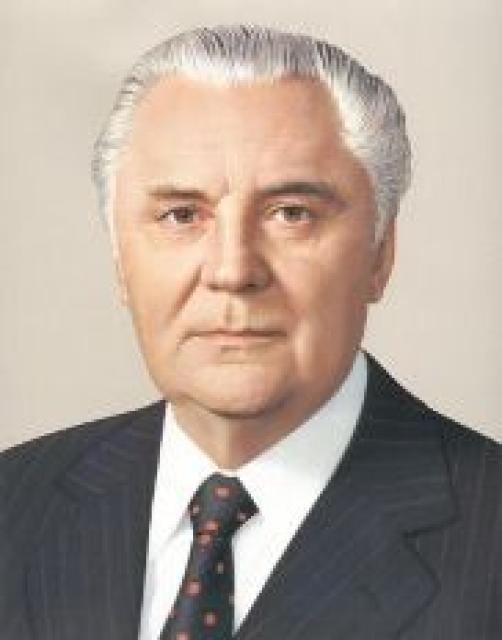
Vladimir Shcherbitsky was a prominent Soviet politician and member of the Communist Party. Born into a working-class family, he began his political career as a Komsomol activist in Ukraine. Shcherbitsky joined the Communist Party in 1941 and held various positions within the party throughout his career. He served as the first secretary of the Central Committee of the Communist Party of Ukraine from 1961 to 1990 and was a member of the Politburo of the Central Committee.
Early Life and Education
Vladimir Shcherbitsky was born into a working-class family. His father, Vasily Grigoryevich, and mother, Tatiana Ivanovna, raised him in Ukraine. From an early age, Shcherbitsky was involved in Komsomol activities and became a dedicated member of the Communist Party. He graduated from the mechanical faculty of the Dnipropetrovsk Chemical and Technological Institute in 1941, specializing in mechanical engineering.
Early Political Career
During World War II, Shcherbitsky studied at the Military Academy of Chemical Defense from 1941 to 1942. He then served in a tank brigade in the Transcaucasian region from 1942 to 1945. After being demobilized with the rank of captain in 1946, Shcherbitsky began his party work in Dniprodzerzhynsk. He held various positions within the Communist Party, including the second secretary of the Dniprodzerzhynsk City Committee of the Communist Party of Ukraine from 1948 to 1951 and the party organizer of the Central Committee of the Communist Party of the Soviet Union at the Dnipropetrovsk Metallurgical Plant named after F. E. Dzerzhinsky from 1951 to 1952. From 1952 to 1954, Shcherbitsky served as the first secretary of the Dniprodzerzhynsk City Committee of the Communist Party of Ukraine and later became the first secretary of the Dnipropetrovsk Regional Committee of the Communist Party of Ukraine from December 1955 to December 1957.
Political Rise
Shcherbitsky's political career continued to advance, and he became a secretary of the Central Committee of the Communist Party of Ukraine from 1957 to 1961. In 1961, he became the chairman of the Council of Ministers of the Ukrainian Soviet Socialist Republic. Shcherbitsky returned to Dnipropetrovsk in 1963 and served as the first secretary of the Dnipropetrovsk Regional Committee of the Communist Party until 1965. He then went on to become the chairman of the Council of Ministers of the Ukrainian Soviet Socialist Republic from 1965 to 1972.
Leadership of the Communist Party of Ukraine
In May 1972, Shcherbitsky became the first secretary of the Central Committee of the Communist Party of Ukraine, succeeding Petro Shelest. He held this position until the fall of 1989 when he retired at the insistence of Mikhail Gorbachev. Shcherbitsky was highly regarded for his contributions to the Ukrainian economy and culture but was criticized for suppressing nationalism in the republic and his role in covering up the Chernobyl disaster.
Later Years and Legacy
In 1985, Shcherbitsky traveled to the United States, where he met with President Ronald Reagan. However, his reputation suffered after the Chernobyl disaster, as he was accused of hiding the true scale of the catastrophe. Shcherbitsky passed away on February 16, 1990, just one day before his 72nd birthday. His death was officially attributed to pneumonia, although some close associates speculated it may have been suicide. Shcherbitsky was buried at Baikove Cemetery in Kiev.
After his death, Shcherbitsky's reputation was tarnished, and Ukrainian media, under the direction of the country's leadership, mainly published negative materials about him. However, in 2003, on the occasion of the 85th anniversary of his birth, Shcherbitsky was "rehabilitated." Ceremonies and memorials were held in his hometown of Dnipropetrovsk, and a street was named in his honor. Shcherbitsky's wife, Rada Gavrilovna, and their children, Olga and Valery, survived him. His brother, Georgy, tragically died during World War II.