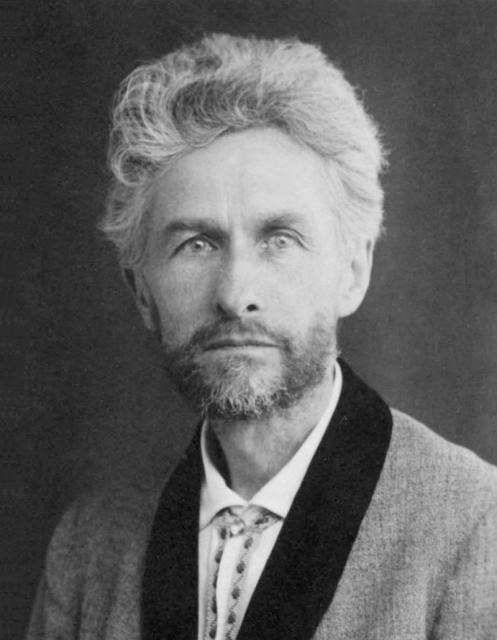
Vydunas
 Lithuania
- Vydūnas: A Renaissance Lithuanian
- Early Life and Education
- A Polymathic Scholar
- Cultural Activism
- Dramatic Works
- Philosophical and Mystical Beliefs
- Resistance and Persecution
- Legacy and Memorialization
Vydūnas: A Renaissance Lithuanian
Vydūnas (1868-1953) was a multifaceted Lithuanian who left an indelible mark on his country's culture, literature, and philosophy.
Early Life and Education
Born into an humble family in Jonaičiai, Lithuania, Vydūnas's father was a primary school teacher. He pursued a career in education, graduating from the teacher's seminary in Ragnit (now Neman). From 1888 onwards, he taught at various schools while simultaneously pursuing higher studies in Germany.
A Polymathic Scholar
Vydūnas studied a wide range of subjects at universities in Greifswald, Halle, Leipzig, and Berlin. His studies encompassed literature, philosophy, art history, religious history, and foreign languages. He was an accomplished linguist, proficient in German, English, French, and Russian.
Cultural Activism
Vydūnas played a pivotal role in fostering Lithuanian cultural life in East Prussia, where he lived for many years. He founded literary societies, organized choirs, and published Lithuanian periodicals such as "Šaltinis" and "Jaunimas." He also wrote several articles and brochures in German about Lithuanian history and culture.
Dramatic Works
Vydūnas's literary output included a number of plays that drew heavily on Symbolist aesthetics. Notable examples include "Shadows of the Ancestors" (1908), "Eternal Fire" (1912), and "World Fire" (1928). His dramas explored existential themes and sought to awaken a spiritual consciousness among his audience.
Philosophical and Mystical Beliefs
Vydūnas's philosophical and religious writings reflected an eclectic worldview that blended elements of Neoplatonism, the Bhagavad Gita, and Theosophy. In works such as "Death and What Comes After" (1907) and "The Mysterious Grandeur of Mankind" (1907), he developed a syncretic doctrine that emphasized the importance of self-knowledge, vegetarianism, and service to humanity.
Resistance and Persecution
During the rise of Nazism in Germany, Vydūnas was subjected to repression for his pacifist and internationalist views. He was arrested and imprisoned in 1938 but was eventually released due to protests from prominent cultural figures. With the approach of Soviet troops in 1944, he fled East Prussia and died in Detmold, Germany, in 1953.
Legacy and Memorialization
Vydūnas's remains were returned to Lithuania in 1991 and reburied in Bitenai. His image adorns the 200 litas banknote. In Kintų village, a cultural center dedicated to Vydūnas houses a memorial exhibition that includes his original harp, which he used to create music that harmonized his soul with the universe.


