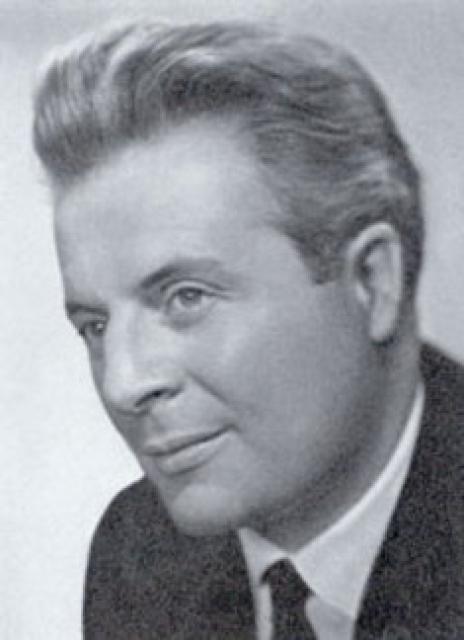
Waldemar Kmentt
 Austria
- Early Life and Education
- Operatic Debut and Salzburg Festival Star
- International Acclaim and Bayreuth Debut
- Operetta and Character Roles
- Pedagogy and Legacy
Early Life and Education
Waldemar Kment was born in Vienna, Austria on February 2, 1929. His musical journey began in 1949 as a piano student at the Vienna Conservatory (now known as the University of Music and Performing Arts Vienna). He later switched to vocal studies under renowned teachers including Adolf Vogel, Elisabeth Radó, and Hans Duhan.
Operatic Debut and Salzburg Festival Star
In 1950, Kment made his debut as a tenor soloist in Beethoven's Ninth Symphony under Karl Böhm. The following year, he made his operatic debut at the Vienna State Opera as a lyrical tenor, where he would remain on stage for over 35 years. He quickly established himself as a regular guest at the Salzburg Festival, captivating audiences in Mozart roles such as Belmonte in "The Abduction from the Seraglio," Don Ottavio in "Don Giovanni," Ferrando in "Così fan tutte," Tamino in "The Magic Flute," and both Idomeneo and Idamante in "Idomeneo."
International Acclaim and Bayreuth Debut
From 1956 onwards, Kment performed internationally, showcasing his talents in opera houses across Milan, Rome, Paris, Amsterdam, Brussels, Berlin, Munich, and beyond. He made his Bayreuth Festival debut in 1968, singing the role of Walther von Stolzing in "Die Meistersinger von Nürnberg."
Operetta and Character Roles
In addition to his operatic repertoire, Kment was also renowned for his performances in operettas, particularly in "Die Fledermaus" (The Bat), which became one of his signature roles. He also excelled in character roles such as Jacquino in Beethoven's "Fidelio," Erik in Wagner's "Der fliegende Holländer," Bacchus in Strauss's "Ariadne auf Naxos," the Emperor in Strauss's "Die Frau ohne Schatten," and several Italian roles including Rodolfo in "La Bohème," the Chevalier des Grieux in "Manon Lescaut," and Ruggero in "La rondine."
Pedagogy and Legacy
Kment's vocal range spanned over eight decades of operatic and operetta roles. He continued to perform in smaller character roles, including Triquet in "Eugene Onegin," the Innkeeper in "Der Rosenkavalier," and Emperor Altoum in "Turandot" into his late sixties. In addition to his stage career, Kment dedicated himself to teaching at the Vienna Conservatory, where he headed the opera studio from 1978 to 1995, nurturing the talents of many renowned opera singers.


