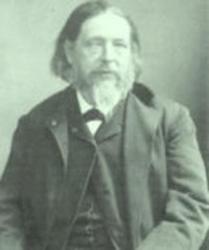
Walter Crane
 Great Britain
- Walter Crane: A Visionary Artist and Masterful Designer
- Early Influences and Artistic Apprenticeship
- Symbolism and Radicalism in Art
- The Italian Interlude and Mystical Symbolism
- The Arts and Crafts Movement and Design Legacy
- 'Arts and Crafts' Society and Artistic Advocacy
Walter Crane: A Visionary Artist and Masterful Designer
Born on August 15, 1845, Walter Crane was an English painter, illustrator, and designer whose artistic journey intertwined with the influential movements of his time.
Early Influences and Artistic Apprenticeship
Crane's father, Thomas, a painter and miniaturist, instilled in him a passion for art from a young age. After his father's passing in 1859, Crane studied under engraver William James Linton, whose appreciation for his meticulous craftsmanship helped secure him early commissions. Linton, a prominent Chartist, introduced Crane to social and religious activist Alfred R. Wise, whose radical ideas deeply influenced Crane's worldview and his embrace of socialist principles.
Symbolism and Radicalism in Art
Crane's 1862 debut at the Royal Academy with "The Lady of Shalott" marked the beginning of his involvement with a group of young artists inspired by Edward Burne-Jones and Simeon Solomon. Their unconventional style earned them the moniker "The Poetical School Without Grammatical Knowledge." Denied by the Royal Academy, they showcased their works at the more liberal Dudley Gallery. Crane also exhibited at the Watercolor Society and later at the Grosvenor Gallery and New Gallery.
The Italian Interlude and Mystical Symbolism
Crane's travels to Italy in 1871 profoundly influenced his artistic vocabulary. Inspired by Renaissance masters, he created "The Death of the Year" (1872), a complex and evocative work that displayed his fascination with mystical symbolism. This affinity for allegory brought him closer to the renowned Edward Burne-Jones, whose artistry he greatly admired.
The Arts and Crafts Movement and Design Legacy
1871 also marked Crane's fateful meeting with William Morris, a fellow socialist. Morris's book, "Art and Socialism," deeply impacted Crane's thinking. Together, they championed the revival of traditional arts and crafts, fostering a significant contribution to decorative arts. Crane designed wallpapers, tapestries, stained glass, and ceramics, pursuing a harmonious balance in interior design.
'Arts and Crafts' Society and Artistic Advocacy
In 1888, Crane co-founded and became the first president of the Arts and Crafts Society, aimed at bridging the gap between artists and artisans. The society promoted the exhibition of applied arts and featured prominent members such as Morris, Burne-Jones, and Philip Webb. Crane's dedication to education and the democratization of art earned him the Professorship of Fine Arts at the Royal College of Art in 1898.
Throughout his career, Walter Crane remained a visionary artist, blending symbolism, allegory, and the principles of the Arts and Crafts Movement. His distinct style and progressive ideas continue to inspire artists and designers to this day.