Walter Haeussermann
 USA
USABiography of Walter Haeussermann
Walter Haeussermann was a German scientist and inventor who played a significant role in the development of the German V-2 ballistic missile. He was a member of the group led by Wernher von Braun and a member of the infamous Peenemünde community, known for its rocket testing site. Haeussermann later joined the Marshall Space Flight Center, where he led the Control and Guidance Laboratory.
Early Life and Career
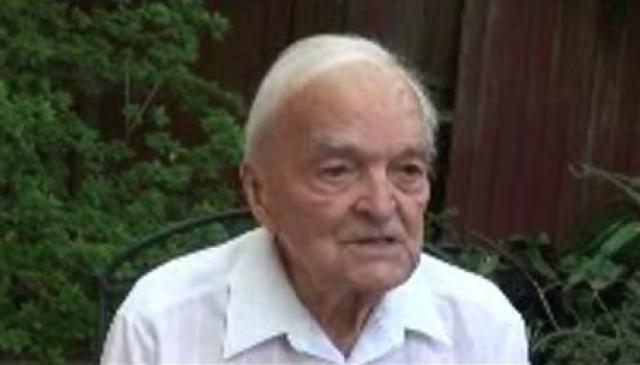
Walter Haeussermann was born in Germany on March 2, 1914, at the beginning of World War I. After completing his initial education, he attended the Darmstadt University of Technology, where he eventually obtained a doctorate in physics. During World War II, Haeussermann was drafted into the German army and assigned to the rocket development center in Peenemünde on December 1, 1939. In an interview from 2008, Haeussermann recalled witnessing a rocket engine test on his first day in Peenemünde, saying, "I was amazed because on my first day, I had the opportunity to witness a rocket test... I was surprised that something like this already existed." It was during this time that Haeussermann, alongside other scientists, worked on the control and flight simulation of the V-2 rocket using analog computers. After three years in Peenemünde, Haeussermann returned to Darmstadt, where he worked for Kreiselgeraet and Siemens, developing gyroscopic platform control.
Joining the von Braun Team
After the war, Haeussermann was invited to join Werner von Braun's team, which was working on missile guidance at Fort Bliss, a military base in the United States. However, Haeussermann had to decline the offer at the time due to his wife's serious illness. Helmut Hölzer and Ernst Steinhoff, who were also involved in the V-2 development, accepted the invitation and moved to the United States as part of Operation Paperclip, a program to recruit German scientists for work in the U.S. Haeussermann arrived in the United States in 1947 to reunite with von Braun's team and began working at Fort Bliss. In 1951, the group relocated to the U.S. Army base, Redstone Arsenal. In 1954, Haeussermann became a naturalized American citizen. He led the Control and Guidance Laboratory and headed the division responsible for radio-electronic equipment at the Marshall Space Flight Center.
Contributions to Space Program
In 1960, NASA was formed, and Haeussermann became one of its employees. He focused on computer and electrical systems, as well as control and navigation equipment for the Saturn V rocket. Haeussermann took responsibility for the safe transportation of astronauts on the Apollo 11 spacecraft, which successfully landed humans on the Moon in 1969.
Recognition and Legacy
Walter Haeussermann made significant contributions to the American space program, as evidenced by his receipt of the Decoration for Exceptional Civilian Service, the highest award presented by the U.S. Secretary of the Army and the U.S. Secretary of the Air Force for his contributions to the American space program. In early December 2010, Haeussermann was hospitalized in Huntsville, Alabama, after a fall, and he passed away on December 8 at the age of 96 due to complications from his injuries.