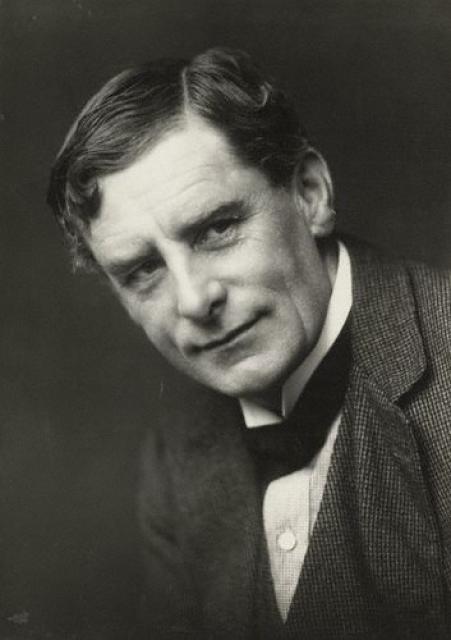
Walter Richard Sickert
 Great Britain
- Biography of Walter Richard Sickert
- Artistic Career
- Personal Life and Later Years
- Literary and Critical Activities
- Controversy and Criminal Speculation
Biography of Walter Richard Sickert
Early Life and EducationWalter Richard Sickert was an English artist who lived during the transitional period between Impressionism and Modernism. Born into a family of artists, Sickert's father was of Danish-German descent, while his mother was Anglo-Irish. His sister, Helen Swanwick, later became a well-known feminist and pacifist. In 1868, the Sickert family moved to England. After completing his schooling, Sickert initially pursued a career in acting before joining the art studio of James Abbott McNeill Whistler. He later studied painting in Paris under the guidance of Edgar Degas.
Artistic Career
Within artistic circles, Sickert was considered a disciple of Whistler after exhibiting his paintings in 1884. He was known for depicting ordinary people in their everyday environments and often painted scenes from concerts, theaters, and theatrical audiences. Sickert also worked as a teacher on evening courses and showcased many of his works at the New English Art Club. In 1894-1895, his drawings were published in Aubrey Beardsley's famous "Yellow Book."
Personal Life and Later Years
In 1885, Sickert married Ellen Cobden, the daughter of a liberal politician, but they divorced in 1899. As a cosmopolitan artist, Sickert lived in Venice, Dieppe, and Paris after his divorce. He returned to London in 1905 and resided in Soho. In 1911, he co-founded the Camden Town Group with artist Harold Gilman. Prior to the outbreak of World War I, Sickert supported modernist artists such as Jacob Epstein, Augustus John, Lucien Pissarro, and Wyndham Lewis.
Literary and Critical Activities
In the later years of his career, Sickert, influenced by Degas, often used photographs or motifs from old Victorian paintings as the basis for his artworks. He continued to engage in literary criticism and teaching. In 1924, he became a member of the Royal Academy of Arts. In 1941, a major retrospective of Sickert's artistic works was held at the National Gallery in London. Lord Beaverbrook, a patron and close friend, was a great collector of Sickert's paintings.
Controversy and Criminal Speculation
Sickert's name has been associated with the crimes of the notorious Jack the Ripper by some researchers. However, most scholars do not support the possibility of identifying Sickert as the killer. Various theories regarding the identity of the mass murderer have considered Sickert, such as those proposed by Stephen Knight in 1976 and Patricia Cornwell in 2002.