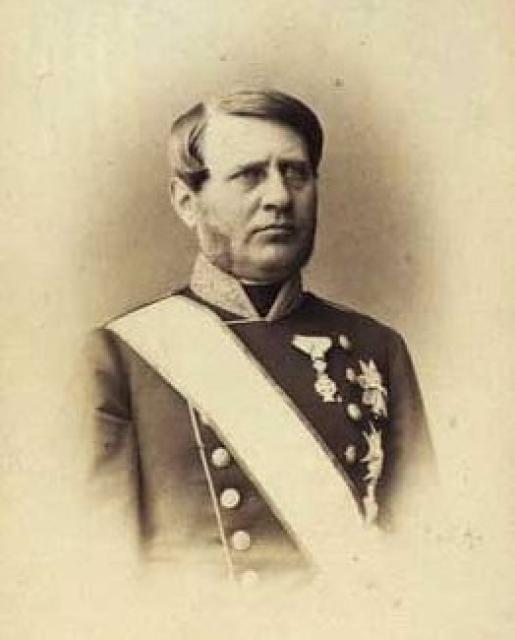
Wilhelm Sponneck
 Denmark
- Early Life and Education
- Political Career
- Customs Reforms
- Postal Innovations
- Foreign Negotiations and Conflict
- Loss of Popularity and Resignation
- Royal Accompaniment and Private Business
- Death
Early Life and Education
Vilhelm Sponneck was born on February 16, 1815, in Ringkøbing, Denmark. In 1832, he graduated from Sorø Academy, a prestigious school for aristocratic children. In 1836, he received his law degree and entered the Danish customs service.
Political Career
In 1848, Sponneck became a member of the Constitutional Assembly and was appointed Minister of Finance. He held this position under five different cabinets and played a key role in shaping Danish economic policy.
Customs Reforms
Sponneck advocated for a unified state with Holstein and implemented several customs reforms to strengthen the economy. In 1850, he introduced legislation abolishing customs differences between Denmark and Schleswig. He also proposed an income tax, but this proposal was rejected by parliament.
Postal Innovations
Sponneck's most enduring legacy is the introduction of postage stamps in Denmark. In 1851, the first Danish stamp was issued under his leadership.
Foreign Negotiations and Conflict
In 1851, Sponneck traveled to Berlin to negotiate a peace settlement between Denmark, Schleswig, and Holstein. These efforts ultimately failed, and Sponneck returned to his domestic political agenda.
Loss of Popularity and Resignation
Despite his economic reforms, Sponneck faced increasing criticism for his support of absolute royal power in relations with Holstein. In 1854, he was forced to resign as Minister of Finance and became head of the customs service.
Royal Accompaniment and Private Business
In 1863, Sponneck accompanied the future King George I of Greece to his new homeland. He remained in Greece for several years before returning to Denmark.
Upon his return, Sponneck pursued a career in private business. He became chairman of the Zealand Railway Control Commission in 1866 and the National Bank two years later. He also served on the board of directors of the Great Northern Telegraph Company before retiring and becoming leader of the newly founded Kjærsholm Handelsbank.


