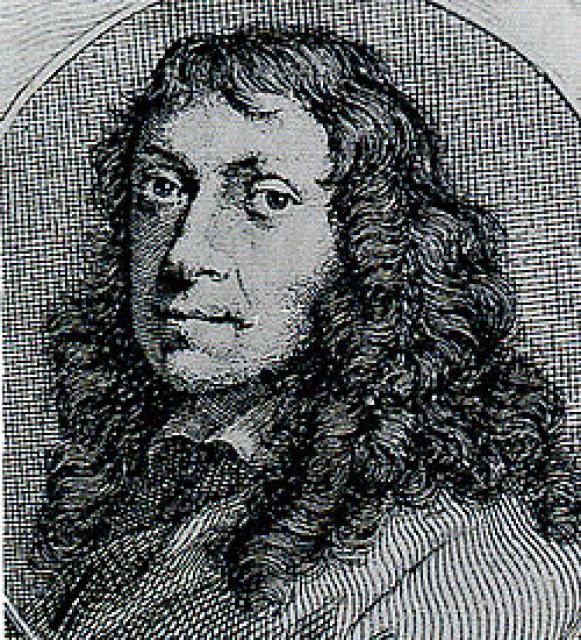
Willem Kalf
 Netherlands
- Willem Kalf: Master Dutch Still Life Painter
- Early Life and Apprenticeship
- Parisian Breakthrough
- Invention of the Pronkstilleven
- Parisian Masterpiece
- Amsterdam and Exoticism
- Master of Light and Shadow
- Later Years and Legacy
Willem Kalf: Master Dutch Still Life Painter
Willem Kalf was one of the most renowned Dutch still life masters of the 17th century.
Early Life and Apprenticeship
Born as the sixth child of a wealthy Rotterdam cloth merchant and city council member, Kalf's father passed away when he was only six years old in 1625. His mother continued the family business with limited success. There are no records of his artistic training, but it is speculated that he may have studied under Hendrick Pot of Haarlem, where Kalf's relatives resided.
Parisian Breakthrough
In 1638, shortly before his mother's death, Kalf left his hometown for The Hague. He subsequently settled in Paris in 1640-41. There, he gained recognition for his "peasant interiors," which depicted scenes from rural life in the Flemish tradition, akin to the style of David Teniers and other 17th-century artists.
Invention of the Pronkstilleven
In Paris, Kalf transformed the so-called "banquet scenes" popularized in the 1630s by artists such as Pieter Claesz, Willem Claesz Heda, and Jan de Heem into a new form of still life. These compositions featured exquisitely arranged groups of expensive and ornate objects—predominantly metalware, tableware, and glassware—made of reflective materials like gold, silver, pewter, and glass. This mastery reached its peak in his enchanting "pronkstilleven" (ostentatious still lifes) during his Amsterdam period.
Parisian Masterpiece
Kalf's most famous (and largest at 2 meters tall) work from his Parisian period is a stunning still life featuring precious vessels, armor, and weapons, created in 1644-45, likely commissioned by Marshal de Tessé and now housed in the Musée de Tessé, Le Mans.
Amsterdam and Exoticism
In 1646, Kalf briefly returned to Rotterdam before moving to Amsterdam and Hoorn, where he married Cornelia Pluvier, a Protestant minister's daughter, in 1651. Cornelia was an accomplished calligrapher and poet, acquainted with Constantijn Huygens, secretary to three stadtholders of the young Dutch Republic, a renowned poet, and arguably the most experienced connoisseur of international theater and music in his time.
The couple relocated to Amsterdam in 1653 and had four children. Despite his wealth, Kalf never owned a home, preferring to support colleagues and acquaintances in need. During his Amsterdam period, he began incorporating exotic items into his elaborate still lifes, such as Chinese porcelain, seashells, and previously unknown tropical fruits like half-peeled oranges and lemons, brought to the Netherlands from the Americas and prized by affluent Dutch burghers as symbols of their prosperity.
Master of Light and Shadow
Like all still lifes of the period, Kalf's creations expressed the iconographic theme of transience—"memento mori" (remember death)—a reminder that all things, both animate and inanimate, eventually pass away. However, Kalf's primary preoccupation lay elsewhere. He had a lifelong fascination with the play of light and its effects on various materials, from the texture of woolen carpets to the radiant sheen of gold, silver, and pewter, the soft glow of porcelain and iridescent seashells, and the enigmatic glimmer of fine Venetian-style goblets and vases.
The meticulous composition of Kalf's still lifes is orchestrated not only by formal principles but also by an unmatched and complex choreography of light. As in his early peasant interiors, highly chromatic objects are illuminated by an unseen light source (e.g., the radiant red lobster in his famed "Still Life with the Horn of the Amsterdam St. Sebastian Militia, Lobster, and Goblets"). Other precious objects—faceted goblets often half-filled with wine—gradually emerge from the dark background, their form sometimes only hinted at by the subtle reflections of light rays. Kalf's depiction of light penetrating a nautilus shell is unmatched in its realism.
He has rightly been called the "Vermeer of still life painting," and in some ways, Kalf surpasses his contemporary.
Later Years and Legacy
From 1663, Kalf painted less, turning to art dealing and becoming a sought-after art expert. Notably, he, alongside fellow artists like Jan Vermeer, was involved in assessing the notorious Italian collection of forged paintings offered for sale to "The Great Elector" Frederick William in 1672.
Willem Kalf died at the age of 74 after suffering an injury from a fall while returning home from a visit. His unparalleled virtuosity in painting, coupled with his formidable intellect and extensive knowledge of natural science, greatly expanded the illusionistic possibilities of still life painting. His works stand as unrivaled exemplars of the genre.



