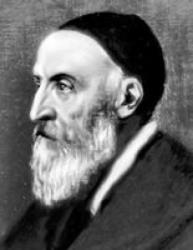
Gilbert Stuart
 USA
USA- Gilbert Stuart: The Father of American Portraiture
- Early Life and Education
- A Star in London
- Financial Misfortunes and Return to America
- Immortalizing George Washington
- Financial Struggles and Legacy
Gilbert Stuart: The Father of American Portraiture
Gilbert Stuart, born in 1755, stands alongside John Singleton Copley as a pivotal figure in the emergence of American painting. Known primarily as a portrait artist, Stuart created over a thousand likenesses of his contemporaries, including six of the first seven U.S. presidents.
Early Life and Education
Stuart's father, an immigrant from Scotland, worked in a snuff mill while his mother came from a wealthy Rhode Island landowning family. At age seven, the aspiring artist moved with his family to Newport. Exhibiting a talent for painting, he apprenticed under the Scottish painter Cosmo Alexander in 1771. He sailed to Edinburgh to complete his education but returned home after Alexander's untimely death the following year.
A Star in London
With prospects for artistic education in America limited by the Revolutionary War, Stuart travelled to England in 1775, where he studied under Benjamin West. By 1777, he was exhibiting his paintings at the Royal Academy of Arts. His career flourished, and at one point, prices for his works surpassed those of leading English painters like Thomas Gainsborough and Joshua Reynolds.
Financial Misfortunes and Return to America
Despite his artistic success, Stuart was reckless with money and faced the threat of debtor's prison. In 1787, he fled to Dublin and returned to the United States in 1793, settling in New York. He opened a studio in 1795 in a Philadelphia suburb, where he encountered many influential figures.
Immortalizing George Washington
Stuart became the most renowned portraitist of George Washington, producing several portraits, including the iconic unfinished "The Athenaeum." This image would later become the basis for Washington's depiction on the one-dollar bill. Stuart created approximately 130 copies of the portrait during his lifetime.
Financial Struggles and Legacy
Faced with financial difficulties, Stuart established a studio in Washington, D.C. in 1803. However, he later relocated to Boston in 1805. In 1824, a stroke partially paralyzed him but did not halt his artistic endeavors. Stuart died in Boston in 1828 at age 72. Due to lingering debts, he was buried in a pauper's grave in Boston Common. His remains were never identified when his family attempted to move them to Newport.
Today, Gilbert Stuart is celebrated as the foundational figure of American painting. His works grace the collections of prestigious museums throughout the United States, and his birthplace in Rhode Island has been transformed into a museum.