William Birdwood
 Great Britain
- Birth and Early Life
- Military Career in India
- Anglo-Boer War and Rise to Prominence
- Gallipoli Campaign
- Leadership in France
- Post-War Service
Birth and Early Life
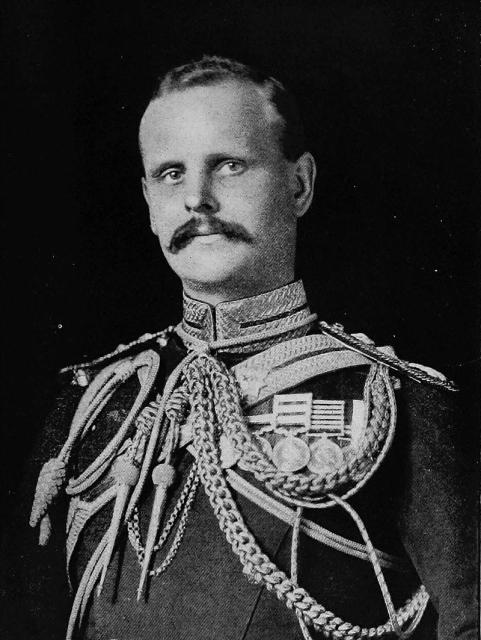
William Birdwood, a British field marshal, was born on March 20, 1854, into a noble family. His father, an English civil servant, served in Bombay, British India. Birdwood received his education at Clifton College in Bristol and the Royal Military College in Sandhurst.
Military Career in India
In 1883, Birdwood joined the Royal Scots Fusiliers as a lieutenant. In 1885, he transferred to the Indian Army and served in the 12th Lancers. He soon moved to the 11th Bengal Lancers, where he remained for over two decades. His regiment was stationed in Dehradun, on the border with Afghanistan.
During this time, Birdwood participated in campaigns against rebellious tribes and national liberation uprisings in India. In 1896, he was promoted to captain.
Anglo-Boer War and Rise to Prominence
From 1899, Birdwood served in the Anglo-Boer War, where he became military secretary to Commander-in-Chief Horace Kitchener. Kitchener became a lifelong patron of Birdwood. In 1902, he returned to India and worked in Kitchener's headquarters as Commander-in-Chief.
From 1909, Birdwood commanded the Indian Army's cavalry brigade. In 1912, he rose to the position of Quartermaster-General of the Indian Army. In 1913, he served as Secretary of the Military Department in the British Indian government.
Gallipoli Campaign
With the outbreak of World War I in November 1914, Kitchener once again chose Birdwood to lead the Australian and New Zealand Army Corps (ANZAC), which was deployed to Egypt. Initially intended for the Western Front, the corps was diverted to the Dardanelles campaign.
Birdwood led the ANZAC during the entire Gallipoli campaign, where the corps suffered heavy casualties. Concurrently, in March 1915, Birdwood was appointed Commander-in-Chief of the Australian Imperial Forces, but this role was largely titular. He only commanded Australian and New Zealand units in Europe.
Leadership in France
From November 1915, Birdwood commanded the Dardanelles Army, which included the ANZAC, 8th, and 9th British Army Corps. By January 1916, Allied troops had evacuated the Gallipoli Peninsula. The ANZAC was then withdrawn to Egypt and split into two Australian and New Zealand Army Corps. Birdwood initially led the 2nd Corps in February 1916, but soon after became Commander of the 1st Australian and New Zealand Army Corps.
The corps was deployed to France, where it fought until the war's end. Birdwood also participated in the Battle of the Somme.
Post-War Service
Birdwood remained in Europe until 1920 and received a monetary reward of £10,000. He returned to India and was appointed Commander of the Northern Army in British India in 1920. In 1921, he became Commander-in-Chief of the Northern Command in India.
In 1920, Birdwood was promoted to full general in the British Army. He also temporarily held the rank of full general in the Australian Army from 1917. In 1925, he was appointed Commander-in-Chief in India. On March 20, 1925, he was promoted to field marshal of the United Kingdom. In 1927, he was granted the honorary rank of field marshal of Australia.