
William Edwards Deming
 USA
USABiography of William Edwards Deming
William Edwards Deming was an American scientist and economist who gained the most recognition for his improved version of the Shewhart Cycle, now known as the Shewhart-Deming Cycle, and his theory of management based on his theory of profound knowledge. He was born in 1900 in Sioux City, Iowa, to William Albert Deming and Pluma Irene Edwards. He spent most of his childhood on his grandfather's chicken farm, owned by Henry Edwards. However, he later moved to his parents' new farm near Powell, Wyoming. His parents understood the importance of education and took great care in his upbringing.

In 1917, Deming enrolled at the University of Wyoming and completed his bachelor's degree in electrical engineering four years later. He continued his studies and earned a master's degree from the University of Colorado in 1925. He later became a candidate for a doctorate from Yale University. Throughout his life, Deming worked at New York University, where he taught statistics to students in the Business Administration department. He was also a professor at Columbia University in New York City from 1988.
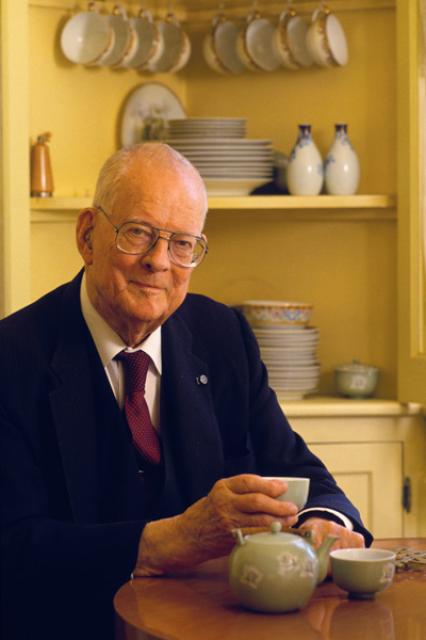
In 1927, Deming met renowned American economist Walter A. Shewhart, who worked at Bell Telephone Laboratories. This meeting led Deming to pay more attention to new methodologies and incorporate them into his work. In 1939, Deming authored the book "Statistical Method from the Viewpoint of Quality Control," which was based on lectures he attended at the University College of London.
In 1947, Deming visited Japan for the first time to work on a population census plan. His enthusiasm and knowledge impressed Japanese scientists, and he was invited to join the Japanese Union of Scientists and Engineers. He trained specialists in new techniques to improve product quality for several months. These strategies were implemented in various companies, leading to a significant improvement in the quality and quantity of production and contributing to the country's economic growth.
In December 1950, the Japanese government established the Deming Prize in recognition of outstanding achievements in quality improvement. After returning to the United States, Deming continued to work in the field of economics. In 1980, he appeared in the documentary film "If Japan can... Why can't we?" which discussed the sharp rise in Japan's economy and the reasons why it did not occur in the United States. Many American entrepreneurs sought to work with Deming to achieve increased productivity and quality.
Throughout the following decades, Deming worked with numerous leading companies in America, including Ford Motor Company and Marshall Industries. In 1982, he published his second book, "Quality, Productivity, and Competitive Position," later known as "Out of the Crisis," where he formulated his famous "14 Points of Management." In the late 1980s, Deming received an honorary doctorate from Oregon State University and the National Medal of Technology and Innovation.
In 1993, Deming released his final book, "The New Economics for Industry, Government, Education," which included a revised list of his "14 Points for Business." On December 20, 1993, William Edwards Deming passed away peacefully in his sleep at his home in Washington.


