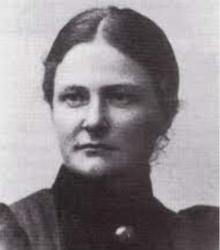
William Francis Dufty
 USA
- A reporter with a musician’s ear
- Telling Billie Holiday’s story
- Sugar, Swanson, and a new public cause
- A life spent putting stories into words
William Francis Dufty built an unusually wide-ranging career as a journalist, labor organizer, speechwriter, musician, and author. He is best known for helping Billie Holiday tell her life story in Lady Sings the Blues and for Sugar Blues, his 1975 critique of refined sugar that became a touchstone of the natural-food movement. His life also became closely linked to Hollywood icon Gloria Swanson, whose interest in nutrition helped shape his most famous later work.
A reporter with a musician’s ear
Dufty was born on February 2, 1916, near Grand Rapids, Michigan. He learned to play piano by ear and, as a child, hosted a radio program. He attended Wayne State University but left before graduating to work as an organizer and speechwriter for the United Auto Workers. During World War II, he served in the U.S. Army for four years, reaching the rank of sergeant and serving in North Africa and Europe.
After the war, Dufty moved into journalism and political communications. He edited publications for the Congress of Industrial Organizations and later worked with Americans for Democratic Action. In New York, he contributed to the New York Post, where he became known as a sharp writer able to move between political reporting, popular culture, and personal storytelling. His union and civic work gave him a lasting interest in labor and social justice, even as his writing increasingly crossed into music and celebrity memoir.
Telling Billie Holiday’s story
Dufty’s best-known early book was Lady Sings the Blues, published in 1956 under the names of Billie Holiday and Dufty. Drawing on conversations with the singer and shaping her recollections into a first-person narrative, the book offered readers an intimate account of her career, racism, addiction, and struggles with the law. Its candid voice helped make it a landmark in music autobiography and later inspired the 1972 film of the same name.
The book’s power came in part from Dufty’s ability to make a complicated life legible in a direct, conversational style. It was also a crafted collaboration: Holiday’s memories and voice were rendered through Dufty’s writing, and later biographers have questioned some of the memoir’s details. His role in the project helped establish him as a sought-after ghostwriter, with a talent for bringing a subject’s public persona into a readable narrative.
Sugar, Swanson, and a new public cause
Dufty met actress Gloria Swanson in the 1960s at a conference on food and cancer. She was an outspoken advocate of avoiding refined sugar and persuaded him to rethink his own diet. He later credited giving up sugar with a dramatic change in his weight and health. The experience became the basis for Sugar Blues, published in 1975, a lively blend of memoir, food history, and polemic that argued that refined sugar was harmful and socially entrenched.
The book became a bestseller and helped popularize macrobiotic eating in the United States. Dufty promoted its ideas through interviews and public appearances, often alongside Swanson, whom he married in 1976. His nutrition writing influenced many readers, though its stronger health claims reflected the advocacy and alternative-health culture of its time rather than medical consensus. He also helped Swanson write her autobiography, Swanson on Swanson, published in 1980.
A life spent putting stories into words
Dufty remained devoted to Swanson until her death in 1983 and continued to write on food, health, and public life. His books connected the worlds of labor politics, jazz, celebrity, and nutrition, showing the range of a writer who could serve as reporter, collaborator, and advocate. He died in Birmingham, Michigan, on June 28, 2002, at the age of 86.
His legacy rests on two very different kinds of storytelling: the intimate, sometimes contested portrait of a jazz legend and the energetic campaign against sugar that made him a prominent voice in alternative nutrition. In both, Dufty’s defining skill was turning complex ideas and personal histories into accessible narratives that invited readers to take a closer look at the lives and habits around them.