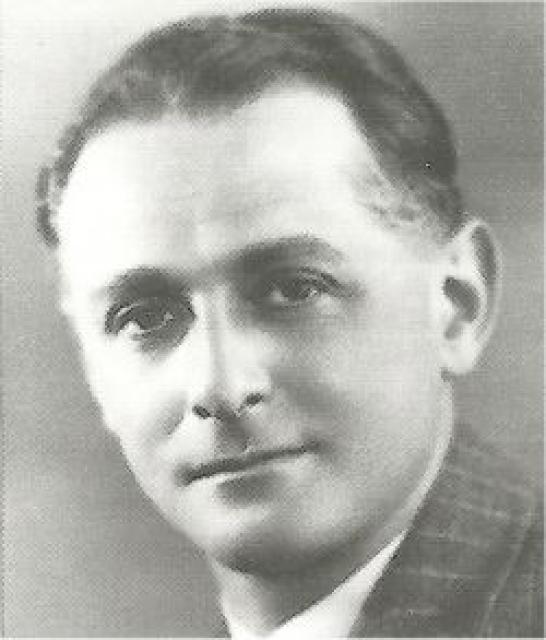
William Heddle Nash
 Great Britain
Biography of Heddle Nash
William Heddle Nash, an English opera singer and tenor, was born in 1894 in the South London district of Deptford. His father, William Nash, was a master builder, and his mother's name was Harriet Emma née Carr. Growing up in a musically inclined family, Nash was exposed to gramophone records, particularly those of Enrico Caruso.
Nash received a scholarship to the Blackheath Conservatoire of Music but his studies were interrupted by the outbreak of World War I. He served in France, Salonika, Egypt, and Palestine. After the war, Nash resumed his musical education and gained experience performing oratorios and concerts.
At the beginning of his stage career, Nash worked in a Marionette Theatre, where he sang from the orchestra pit while puppets took center stage. His beautiful tenor voice captivated audiences, even though he remained hidden in the orchestra pit.
After a successful season in London, Nash embarked on a tour in New York. Upon his return, he continued his studies in Milan with Giuseppe Borgatti. In 1924, Nash made his operatic debut at Teatro Carcano in Milan, replacing an ill tenor in the role of Almaviva in Rossini's "Il barbiere di Siviglia."
His unexpected success in Milan led to engagements in Turin, Bologna, and Genoa before returning to England. Nash married Florence Emily Violet Pearce, and they had two sons, one of whom became a renowned operatic baritone.
Back in London, Nash joined the Old Vic Company and primarily performed English-language tenor roles. He sang in numerous operas, including "Rigoletto," "Faust," "Madama Butterfly," and "The Magic Flute." Nash frequently collaborated with Lilian Baylis, a prominent British theatre producer, and made several recordings with her, including oratorios.
Following the Old Vic season, Nash joined the British National Opera Company for a touring season after a brief engagement in London. His roles during this period included Almaviva, Fenton in "Falstaff," Turiddu in "Cavalleria rusticana," Romeo in "Roméo et Juliette," De Grieu in "Manon," and David in "Die Meistersinger von Nürnberg."
In 1929, Nash made his debut at the Royal Opera House, Covent Garden, as Don Ottavio in Mozart's "Don Giovanni." He continued to sing leading tenor roles at Covent Garden during World War II. In 1934, Nash portrayed Basilio in "Le nozze di Figaro" at the Glyndebourne Festival, becoming a sought-after guest artist. Critics lauded Nash's elegant interpretation of Mozart.
During the war, Nash toured with the Carl Rosa Opera Company. His final performance at Covent Garden took place in April 1948, in "Die Meistersinger von Nürnberg." He made occasional stage appearances until 1958.
Nash's repertoire extended beyond opera roles, and he recorded numerous songs and oratorios, earning a reputation as one of the greatest concert performers of his time. In his later years, Nash served as a vocal professor at the Royal College of Music. He gave his last public performance in Handel's "Messiah" a few months before his death.


