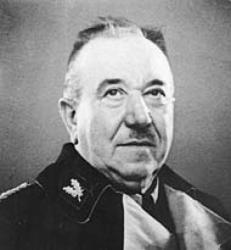
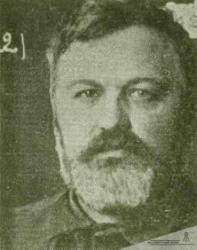
William Ypres
- William of Ypres, Count of Kent
- Claim to the County of Flanders
- Rival Claims
- Conflict and Defeat
- Exile and English Service
- Rise to Prominence
- Ruthless Tactician
- Victory at Winchester
- Reward and Retirement
William of Ypres, Count of Kent
William of Ypres was a Flemish nobleman who claimed the County of Flanders in 1119-1128. He was the illegitimate son of Philip de Loo, the younger son of Robert I the Frisian, Count of Flanders from 1070-1092. After the death of the childless Count Baldwin VII in 1119, William claimed the Flemish throne as the last male-line descendant of Robert the Frisian.
Claim to the County of Flanders
William was supported by Baldwin VII's mother, Clemence of Burgundy, who was an aunt of William's wife. However, William's illegitimacy proved to be a significant obstacle. Ultimately, Charles the Good, the son of Danish King Canute IV the Saint and Adela of Flanders (Robert the Frisian's daughter), was elected Count of Flanders. William of Ypres contested Charles' election, but was defeated and captured by his supporters, forcing him to renounce his claim to the throne.
Rival Claims
Despite his setback, William remained popular among the Flemish and continued to pursue the county's crown. After Charles the Good was assassinated by the people of Bruges in 1127, William once again became a leading contender for the throne. However, his election was thwarted by French King Louis VI, who supported his brother-in-law, William Clito. Clito's grandmother was a daughter of Baldwin V, giving him a tenuous claim to the Norman and English crowns, which Louis VI exploited to counterbalance England.
Conflict and Defeat
With French support, William Clito established himself in Flanders, defeating and expelling other claimants, including William of Ypres, in a series of battles. However, in mid-1128, Clito was fatally wounded during the siege of Aalst. Thierry of Alsace, son of the Duke of Lorraine and a maternal grandson of Robert the Frisian, seized the opportunity to secure his own election as Count of Flanders, expelling the French forces from the county.
Exile and English Service
In 1133, Thierry accused William of Ypres of plotting to seize the Flemish throne, banishing him from the country and confiscating his property. William fled to England, where he aligned himself with Stephen of Blois, the nephew of King Henry I. When Stephen was elected King of England in 1135, William of Ypres became a commander of mercenary troops in Stephen's service.
Rise to Prominence
Recruiting from Flanders, William created a highly skilled and effective mercenary force that became central to Stephen's interests. During the civil war between Stephen's supporters and those of Empress Matilda, William of Ypres proved to be one of the king's most capable military commanders, earning his friendship and trust.
Ruthless Tactician
William gained a reputation for ruthlessness and aggression, particularly during King Stephen's campaign in Normandy in 1137, where the actions of his mercenaries aroused local resentment. In early 1141, his forces participated in the Battle of Lincoln, where Stephen's supporters were routed and the king himself was captured.
Victory at Winchester
Undeterred, William refused to recognize Empress Matilda as England's queen and began raising a new army in Kent. His troops approached London in August 1141, provoking a rebellion against Matilda and forcing her to flee the city. Joining forces with detachments led by Matilda of Boulogne, Stephen's wife, William advanced against the empress's supporters and defeated their army at the Battle of Winchester on September 14, 1141. William captured Robert of Gloucester, the de facto leader of Matilda's party in England, who was later exchanged for King Stephen.
Reward and Retirement
For his service in 1141, Stephen of Blois granted William the title of Earl of Kent. In the following years, the earl continued to support the king against Matilda's supporters. After Henry II ascended to the English throne and disbanded the Flemish mercenaries, William of Ypres was allowed to retain his Kent estates until 1157. However, his eyesight gradually failed in the late 1140s, eventually leading to blindness. By the early 1160s, the earl had returned to Flanders, where he entered the monastery of Saint-Pierre-de-Loo and died shortly thereafter. The exact year of his death is unknown. There is no record of William having any children.