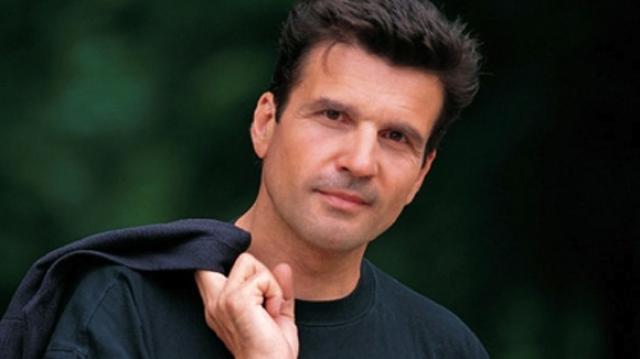
Wolfgang Holzmair
 Austria
- Early Life and Education
- Vocal Competitions and Success
- Operatic Career
- Hans-Werner Henze's "Boulevard Solitude"
- Wolfgang Amadeus Mozart's "The Magic Flute" and "Così fan tutte"
- Chamber Music and Teaching
- Legacy
Early Life and Education
Wolfgang Holzmair was born in Vöcklabruck, Austria. He studied at the Vienna Academy of Music and Dramatic Art.
Vocal Competitions and Success
In 1981, Holzmair won second prize at the 's-Hertogenbosch International Vocal Competition. The following year, he took first prize at the Musikverein International Lieder Competition in Vienna.
Operatic Career
Holzmair spent six years in the opera companies of Bern and Gelsenkirchen. He achieved success with his performances in Udo Zimmermann's "The White Rose" and Claude Debussy's "Pelléas et Mélisande." His repertoire included:
Hans-Werner Henze's "Boulevard Solitude"
Nigel Osborn's "The Electrification of the Soviet Union"Paul Hindemith's "News of the Day"
Francis Poulenc's "Les mamelles de Tirésias"
Holzmair also performed in more traditional operas:
Richard Strauss's "Capriccio," "Ariadne auf Naxos," and "Der Rosenkavalier"
Wolfgang Amadeus Mozart's "The Magic Flute" and "Così fan tutte"
Richard Wagner's "Tannhäuser" and "Meistersinger"Solo Career
Holzmair also achieved great success as a soloist. His clear, expressive, and light-high voice was ideal for Lieder. He collaborated with renowned pianists, including Imogen Cooper, Andreas Haefliger, and Gerard Wyss.
Chamber Music and Teaching
Holzmair is known for his chamber music performances, collaborating with the Wanderer Trio, Nash Ensemble, and Rachmaninov Trio. He has taught at various institutions since 1998 and regularly gives masterclasses.
Legacy
Holzmair has significantly contributed to the performance of Lieder and songs from the 18th, 19th, 20th, and 21st centuries. He has also drawn attention to composers who were marginalized during the Nazi era.


