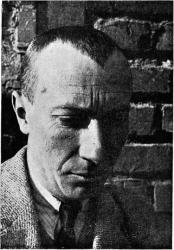
Yacov Glinka
- Ivan Vasilevich Glinka
- Early Life and Education
- Government Service
- Imperial Memorandum
- Post-Revolution Life
- Historical Legacy
Ivan Vasilevich Glinka
Ivan Vasilevich Glinka was a Russian statesman and artist born in 1870 in Zhytomyr, Ukraine, to a noble family.
Early Life and Education
Glinka studied law at the Imperial University of St. Petersburg, graduating in 1895 and entering the State Chancellery. In 1905, he became the Senior Clerk in its Laws Department.
Government Service
In 1906, Glinka was appointed to manage the proceedings of the newly opened First State Duma. After its dissolution, he led the temporary offices that handled accumulated documentation between parliamentary sessions. He played a key role in establishing the State Duma's Office as an independent state institution.
From 1908, Glinka served as Head of the General Assembly Department within the Duma's Office. He acted as an advisor and assistant to Duma chairpersons, providing essential information and facilitating their duties. Through his close relationships with Chairmen Aleksandr Guchkov and Mikhail Rodzianko, he exerted significant behind-the-scenes influence on the Duma.
Imperial Memorandum
In March 1916, Glinka co-authored a memorandum with Alexander Klopov, urging Tsar Nicholas II to establish a ministry accountable to the Duma. The memorandum was presented to the Tsar in October 1916.
Post-Revolution Life
After the February Revolution in 1917, Glinka became a manager in the Provisional Committee of the State Duma. With the Duma's closure, he served as a Senator in the First Department of the Senate.
Following the October Revolution, he returned to Zhytomyr. After working as a digger, he joined the local theater and gradually became its artistic director. From 1938 until his death in 1950, Glinka served as an artist for the Ulyanovsk Drama Theater.
Historical Legacy
Glinka's memoirs, "Eleven Years in the State Duma, 1906-1917," provide valuable insights into the functioning of the Duma, revealing behind-the-scenes details and vividly portraying its members. The book remains an important historical source.