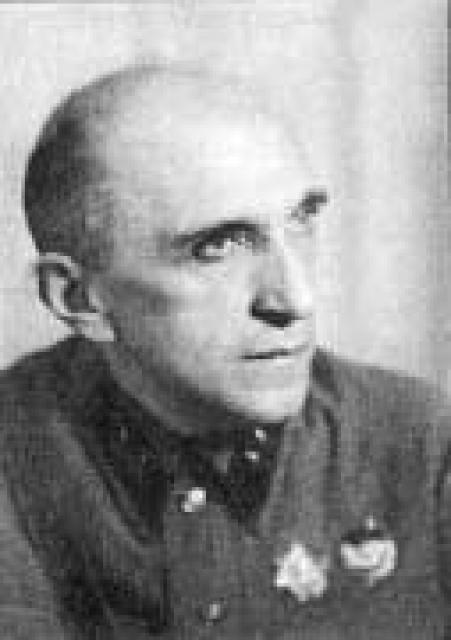
Yakov Serebryanskiy
 Russia
- Early Life and Political Affiliations
- Entering the Intelligence Profession
- Ouster and Return to the Fold
- Covert Intelligence Operations
- Formation of the "Yasha Group"
- Illegal Activities in Europe
- Rise in the OGPU
- Planning the Abduction of General Kutepov
- Expansion of Intelligence Network
- International Operations
- Leadership of the Special Operations Group
- Infiltration of Trotsky's Network
- Failed Assassination Plot
- Arrest and Imprisonment
- The Trial and Death Sentence
- Wartime Service
- Intelligence Operations
- Post-War Period
- Final Arrest and Death
- Rehabilitation and Legacy
- Decorated Spymaster
Early Life and Political Affiliations
Joining the BolsheviksIn 1927, Alexander Mikhailovich Serebryansky joined the Bolshevik Party. Despite his earlier association with the Socialist Revolutionary Party, he maintained his dedication to the revolutionary cause.
Entering the Intelligence Profession
Involvement with the ChekaIn 1920, Serebryansky joined the central apparatus of the Cheka, the forerunner of the Soviet secret police. He initially served in the Secret Operations Department as secretary of the Administrative and Organizational Division.
Ouster and Return to the Fold
In 1921, Serebryansky was arrested by the Cheka for his past affiliation with the Socialist Revolutionary Party. However, he was released and subsequently worked in the editorial office of the newspaper "Izvestiya."
Covert Intelligence Operations
Missions in the Middle EastIn 1923, Serebryansky was recruited by the Foreign Department of the OGPU, the successor to the Cheka. He was assigned to Palestine, where he operated as an illegal agent for two years. Together with OGPU agent Yasha Blumkin, he established a network of informants within the Zionist movement.
Formation of the "Yasha Group"
Serebryansky's recruits became the core of the "Yasha Group," a covert intelligence unit. His wife, Polina Natanovna, also became involved in his work, accompanying him on foreign trips.
Illegal Activities in Europe
From 1925 to 1928, Serebryansky served as an illegal resident for the OGPU in Belgium and France. In 1927, he underwent a party purge and was officially accepted into the Bolshevik Party.
Rise in the OGPU
Leading the 1st DivisionIn 1929, Serebryansky was appointed head of the 1st Division of the OGPU's Foreign Intelligence Department. Simultaneously, he remained the leader of the "Yasha Group."
Planning the Abduction of General Kutepov
In 1929, Serebryansky and OGPU deputy chief S.V. Putsitsky planned and executed the abduction of General A.P. Kutepov, the head of the Russian All-Military Union.
Expansion of Intelligence Network
After the Kutepov operation, Serebryansky focused on creating an independent network of agents in various countries for wartime intelligence gathering.
International Operations
Arrests and SetbacksIn 1931, Serebryansky was arrested in Romania but was quickly released. In 1932 and 1934, he traveled to the United States and Paris, respectively.
Leadership of the Special Operations Group
In 1934, Serebryansky became head of the Special Operations Group (SGO) of the NKVD.
Infiltration of Trotsky's Network
In 1936, the SGO captured part of the archive of the International Secretariat of Trotskyists.
Failed Assassination Plot
In 1938, Serebryansky planned to abduct Leon Trotsky's son, but the operation failed.
Arrest and Imprisonment
Baseless AccusationsIn November 1938, Serebryansky was arrested and subjected to intense interrogation. He was falsely accused of espionage and plotting against Soviet leaders.
The Trial and Death Sentence
On July 7, 1941, Serebryansky was sentenced to death by the Military Collegium of the Supreme Court of the USSR.
Wartime Service
Amnesty and ReinstatementIn August 1941, due to the shortage of experienced intelligence officers, Serebryansky was amnestied and reinstated in the NKVD and the Party.
Intelligence Operations
During the war, Serebryansky participated in numerous intelligence operations and directed reconnaissance and sabotage missions in Western and Eastern Europe.
Post-War Period
Retirement and Return to IntelligenceIn 1946, Serebryansky retired but was recalled to work in the central apparatus of the Ministry of Internal Affairs in 1953.
Final Arrest and Death
In October 1953, Serebryansky was arrested for the second time. In 1956, he died in prison during interrogation.
Rehabilitation and Legacy
Post-Stalinist EraIn 1971, Serebryansky's 1941 sentence was overturned, and in 1996, he was posthumously reinstated with all his state awards.
Decorated Spymaster
Throughout his career, Serebryansky received numerous honors, including two Orders of Lenin, two Orders of the Red Banner, and the distinction of "Honorary Worker of the VChK-GPU."