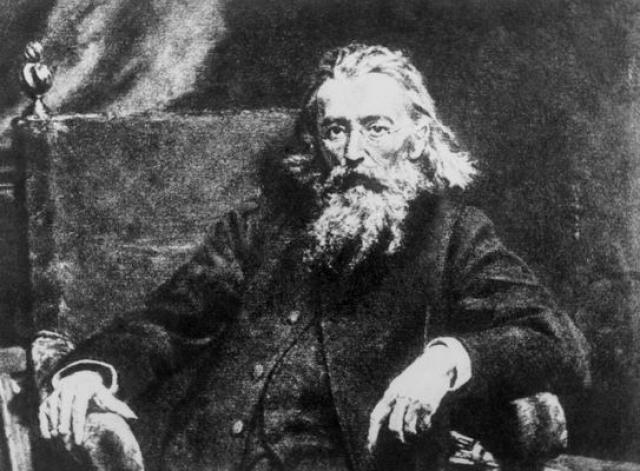
Yan Mateyko
 Poland
- Biography of Jan Matejko
- Early Interests and Works
- Engagement with History and Response to Critics
- Portraits and Career
Biography of Jan Matejko
Jan Matejko, a Polish artist and leader of national Romanticism in Polish visual arts, was born into a family of a music teacher who was originally from Czechia. He studied at the local School of Fine Arts from 1852 to 1858 and also attended the academies of arts in Munich and Vienna from 1859 to 1860. Matejko mainly lived and worked in Krakow.
Early Interests and Works
Even in his youth, Matejko displayed a keen interest in the distinctive features of historical life, documenting them through numerous sketches that would later become known as the "Treasury." Based on these sketches, he published the History of Polish Costume in 1863. He passionately sympathized with the nationalist-liberation goals of the uprising in the Kingdom of Poland (1863-1864) and responded to its defeat with his first significant paintings. He presented episodes from the noble past, which he considered crucial to understanding the subsequent political humiliation of the country. Some of these notable works include "The Jester Stańczyk at the Ball of Queen Bona" (1862), "The Sermon of Skarga" (1864), and "Rejtan in the Sejm" or "The Fall of Poland" (1866).
Engagement with History and Response to Critics
By immersing himself in history, Matejko addressed his critics with a pamphlet-like painting called "The Sentence of Matejko" (1867), where he depicted the reading of his own burning at the stake. As an experienced artist and director, he created multi-figure canvases, aiming to immerse the viewers in the atmosphere of the depicted events. Among his notable works are "The Union of Lublin" (1869), "The Raising of the Sigismund Bell" (1874), and the cycle "The History of Civilization in Poland" (1888-1889), all housed in the National Museum in Warsaw. The monumental "Oath of Prussia to Poland" (Prussian Homage, 1879-1882) also deserves mention, housed in the National Museum in Krakow.
Portraits and Career
Matejko often worked as a portraitist, capturing historical figures like Copernicus (1873, University of Krakow) or contemporary individuals like himself in his self-portrait (1872, National Museum in Krakow). He became the director of the School of Fine Arts in Krakow in 1873. Today, the artist's house has been transformed into a museum, preserving his legacy.


