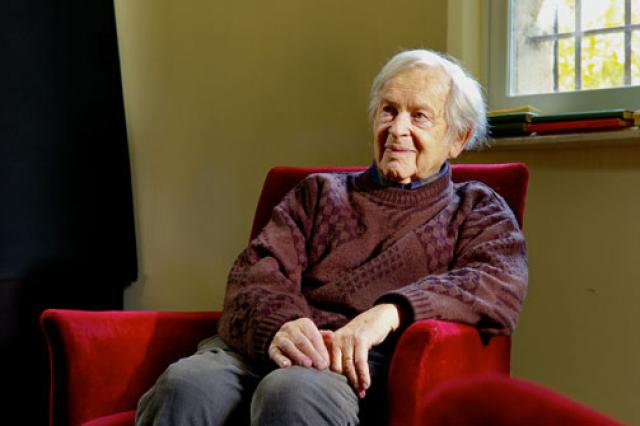
Yehuda Bacon
 Israel
- The Early Years
- The Holocaust
- Liberation and Recovery
- Artistic Expression
- Testimony and Historical Documentation
- Legacy
The Early Years
Yehudi Bacon was born on July 28, 1929, into a Hasidic family in Ostrava, Czechoslovakia. At the age of 13, in autumn 1942, he and his family were deported to the Theresienstadt Ghetto. While there, Bacon shared a room with George Brady and performed in the children's opera "Brundibár."
The Holocaust
In December 1943, Bacon was transported to the Auschwitz-Birkenau concentration camp complex, where he witnessed the Nazis' cynical attempt to present the camp as a "family camp" to the International Committee of the Red Cross. However, the child inmates, known as the "Birkenau Boys," were used for labor throughout the complex. Bacon saw his father murdered in the gas chamber in June 1944. By this time, his mother and sister Hanna had been sent to the Stutthof concentration camp, where they died shortly before liberation.
Liberation and Recovery
On January 18, 1945, Bacon was subjected to a three-day death march, surviving the journey through the Mauthausen-Gusen concentration camp. In March, he was sent on another march to a sub-camp of Mauthausen, Gunskirchen, in the woods. Destitute of food, water, or clothing, Bacon was finally liberated by the U.S. Army on May 5, 1945.
Artistic Expression
After the Holocaust, Bacon decided to become an artist to document his experiences and share his story with future generations. With the support of Youth Aliyah, he arrived in Palestine in 1946 and studied at the Bezalel Academy of Arts. In 1959, he became a professor of drawing and graphics at the academy.
Testimony and Historical Documentation
Bacon's detailed drawings provided visual evidence of the conditions in the concentration camps he endured. His testimony was crucial in the trials of Nazi war criminals, including the Eichmann trial in Jerusalem and the Auschwitz trials in Frankfurt. His work also played a significant role in the trial of Holocaust denier David Irving, who was imprisoned for three years for claiming that there were no gas chambers at Auschwitz.
Legacy
Bacon's artwork reflects the profound impact of his childhood experiences in the concentration camps. He became an early advocate for interfaith dialogue and Israeli-Palestinian dialogue in the 1950s. His works are exhibited in museums and collections worldwide, including the Israel Museum, Yad Vashem, the United States Congress, and the homes of Theodore Roosevelt, John D. Rockefeller, Martin Buber, and Chaim Weizmann. Bacon and his wife, Leah, live in Jerusalem.


