Yishai Beer
 Israel
- Early Life and Education
- Building a Legal and Military Career
- Military Court of Appeals and General Staff
- Scholarship and Public Work
- Personal Life and Legacy
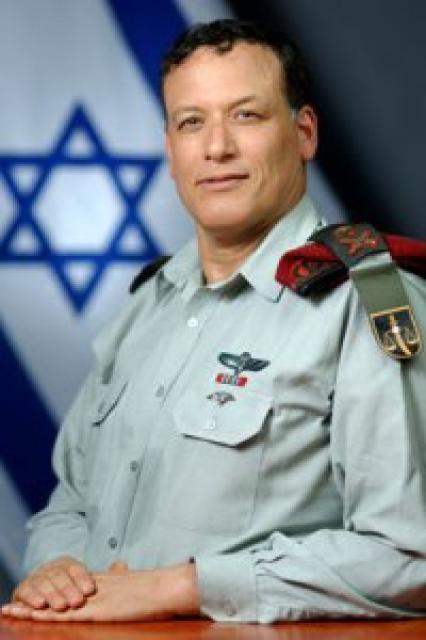
Yishai Beer built an unusual career across two demanding worlds: the Israeli military and legal scholarship. A paratrooper who took part in the 1976 Entebbe rescue operation, he later became a Major General and President of Israel’s Military Court of Appeals, while continuing to teach law. His academic work began in taxation and corporate law before turning increasingly toward the law of armed conflict and the responsibilities of military professionals.
Early Life and Education
Born in Jerusalem in 1956, Beer entered the Israel Defense Forces in 1974 and joined the Paratroopers Brigade. He completed infantry officer training with distinction and served as a platoon commander. In 1976, as a young officer, he participated in the Entebbe rescue operation. He also served as a company commander during Operation Litani. He completed his regular service in 1978, but remained in the reserves, where his military career continued to advance.
After leaving regular service, Beer pursued law. He earned his first degree in law from the Hebrew University of Jerusalem in 1983 and completed an internship at Israel’s Supreme Court. He received a master’s degree from the London School of Economics in 1986 and a doctorate in law from the Hebrew University in 1990. His combination of legal training and experience in the field would later shape both his military leadership and his academic interests.
Building a Legal and Military Career
Beer joined the Hebrew University’s law faculty in the 1980s and became a lecturer in tax law. For more than two decades, he taught and researched taxation and corporate law. His scholarly focus gave him a parallel identity to his reserve service: while building an academic career, he also moved through increasingly senior command positions in the Paratroopers and other IDF formations.
His reserve appointments included command of a paratrooper brigade, the Edom Division, and the IDF’s brigade commanders’ course. In 2000 he was promoted to Brigadier General in the reserves and appointed to command the Edom Division. He also led the IDF’s company and battalion commanders’ course in 2001. These roles placed him in the center of the military’s professional education as well as its operational command structure.
Military Court of Appeals and General Staff
In May 2002, Beer returned to regular service as President of Israel’s Military Court of Appeals and was promoted to Major General. He held the judicial post until 2007, a period when the military justice system faced consequential questions amid the Second Intifada. His background as both a senior commander and a legal scholar informed his approach to the role. The IDF’s official biography describes his tenure as marked by ethical, educational, and command-oriented messages in many of the court’s decisions.
During this period, he continued his university work. In 2004–2006 he also commanded the IDF’s division commanders’ course. Following the 2006 Lebanon War, he chaired the committee that reviewed commendations and decorations for IDF personnel. When his presidency of the appeals court ended in 2007, he became commander of the General Staff Corps and head of the IDF’s senior training and courses. He served as corps commander through 2012, leaving regular service in 2009 and retiring from reserve command in early 2012.
Scholarship and Public Work
Beer’s academic life has included appointments abroad as well as his work in Israel. He was a visiting scholar at Harvard Law School from 1990 to 1992, a visiting research fellow at New York University School of Law in 2009–2010, and a visiting professor at Columbia Law School in 2017 and 2019. He joined the Interdisciplinary Center Herzliya, now Reichman University, in 2010, and served as dean of its Harry Radzyner Law School from 2010 to 2012. He is a professor of law at Reichman’s Radzyner School of Law.
His research moved from taxation toward the law of war, especially the relationship between military professionalism and humanitarian law. Oxford University Press published his book Military Professionalism and Humanitarian Law: The Struggle to Reduce the Hazards of War in 2018. The book brings together the practical perspective of an experienced commander and the analytical concerns of a legal academic, examining how professional military judgment and humanitarian rules can help limit the dangers of armed conflict. He has also written on international humanitarian law, including debates over the protection of hospitals in war.
Personal Life and Legacy
Beer is married to Hagit and they have six children, according to his university biography. His public career has been defined by the rare overlap of scholarship, command, and military judging. From the Paratroopers Brigade to the appeals bench and the university classroom, he has worked at the point where military decisions meet legal principles. That combination continues to inform his teaching and writing on the law of armed conflict.