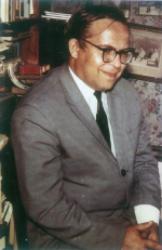
Yuriy Gauthie
- Russian and Soviet Historian: Yuri Vladimirovich Gautie
- Academic Career
- Scholarly Contributions
- Academia and Crisis
- Arrest and Exile
- Return to Moscow
- Areas of Research
- Diary and Legacy
Russian and Soviet Historian: Yuri Vladimirovich Gautie
Early Life and EducationYuri Vladimirovich Gautie was born into a family of French descent in Moscow, Russia. His childhood home was located on the prestigious Kuzenetsky Most street. In 1891, he graduated from Kreyman Gymnasium. Four years later, in 1895, he completed the Faculty of History and Philology at Moscow University, where he studied under P.G. Vinogradov and V.O. Klyuchevsky.
Academic Career
After completing his military service in 1896, Gautie began his teaching career in Moscow gymnasiums. He also worked at the Moscow Archive of the Ministry of Justice and in the Russian Antiquities Department of the Rumyantsev Museum. In 1900, he passed his master's examination and became a private lecturer in Russian history at Moscow University. He also taught at the Higher Women's Courses from 1902 to 1918.
Scholarly Contributions
Gautie's master's thesis, "Zammoskovny Krai v XVII veke: Opyt Issledovaniya po Istorii Ekonomicheskogo Byta Moskovskaya Rus" (1906), was a groundbreaking analysis of Piscovie Books. He demonstrated the impact of the Troubles on the economy and land ownership in Russia. In 1913, he defended his doctoral dissertation on the history of provincial administration during the period of Peter I and Catherine II.
Academia and Crisis
Gautie became an extraordinary professor in 1915 and an ordinary professor in 1917, teaching courses in Russian history, archaeology, and archival studies at Moscow University. He also taught at the Konstantinovsky Institute of Surveying and the Moscow People's University.
During the turbulent years of the Russian Revolution and subsequent Civil War, Gautie continued his work at the Rumyantsev Museum (later Lenin Library), where he served as a scientific secretary, library director, and deputy director for scientific affairs. He played a key role in the museum's transformation into a leading academic institution.
Arrest and Exile
In August 1930, Gautie was arrested as part of the "Academy of Sciences case." Sentenced to five years in a labor camp, he was initially sent to the Ukhta-Pechora camp but was later released and exiled to Samara in 1931. While in exile, he continued his research at the local краеведческое бюро (regional studies bureau).
Return to Moscow
Gautie returned to Moscow in 1934 and taught at the Institute of Philosophy, Literature, and History. In 1936, he became a professor at the Institute of History and Archives. In 1939, he was elected a full member of the Academy of Sciences of the USSR.
Areas of Research
Gautie's research focused on the history of Russia from ancient times to the 19th century, with an emphasis on socioeconomic relations, land ownership, state institutions, archival studies, historiography, and the archaeology of Eastern Europe.
Diary and Legacy
Started in 1917, Gautie's diary provides a unique glimpse into the tumultuous events of the Russian Revolution and its aftermath. It is a valuable resource for understanding the challenges and perspectives of intellectuals during that period. Gautie's descendants include his grandson, renowned surgeon and transplant specialist, S.V. Gautie.