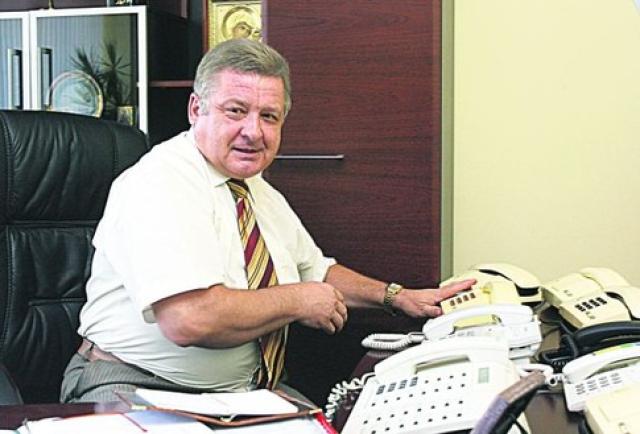
Yuriy Hivrich
 Ukraine
- Yuri Khivrich Biography
- Creating the National Commission for Housing and Communal Services
- Implementation of New Tariffs
- Modernization of Heating Systems
- Energy Efficiency and Building Insulation
- Addressing Debts and Non-Payment Issues
- Promotion of Homeowners' Associations
Yuri Khivrich Biography
Yuri Khivrich is the Minister of Housing and Communal Services of Ukraine. In an interview with "Segodnya", he discussed the increase in utility tariffs and the upcoming major reforms in the housing and communal services sector. According to Khivrich, the blame for the current state of the housing and communal services lies with politicians who insist on keeping the prices low. He argues that there is a cost below which heat and water providers cannot operate, and this cost is constantly escalating due to rising gas prices and salaries. The ministry's losses for the previous year amounted to 1.75 billion UAH, and for the current year it is expected to be 900 million UAH. As a result, there is not enough funding to repair and maintain the networks, leading to insufficient heat and water supply in the apartments.
Creating the National Commission for Housing and Communal Services
To break this cycle, the National Commission for Housing and Communal Services was established and started operating on January 1, 2011. This commission is responsible for calculating new tariffs that will take into account all the costs associated with heating, hot and cold water supply. However, the commission will need time to establish its staff and infrastructure. In the meantime, the calculations will be handled by the National Commission for Energy Regulation and the Ministry of Housing and Communal Services. This arrangement will help to gradually increase the reimbursement of costs for communal enterprises to approximately 100%.
Implementation of New Tariffs
The new tariffs for housing and communal services, with the inclusion of the "political component" represented by local elections, will be implemented from October 15, coinciding with the start of the new heating season. The prices for heat and hot water will increase by 20-30% depending on the region, and these figures are still being calculated by experts. These increases will only cover the gas component, which accounts for an average of 53% of the total cost. Different cities will have different tariffs due to variations in expenditure structure. For example, the percentage of gas price in the cost of heat differs from 50% to 60% and even higher. The cost of a gigacalorie of heat from a combined heat and power plant (CHP) ranges from 160 to 200 UAH, while from a small boiler room it can be 240-270 UAH. The difference is due to the old gas price of 872 UAH per 1000 cubic meters. However, there is a possibility to reduce tariffs by optimizing the use of energy resources.
Modernization of Heating Systems
In order to reduce heat losses, the Ministry of Housing and Communal Services has been modernizing the heating system for the past five years. The first stage involved replacing old boilers with new ones, with around 60% of CHPs in Ukraine now equipped with high-efficiency boilers. The second stage aims to preserve maximum heat until it reaches residential buildings. However, this stage is more labor-intensive and costly, as it requires the installation of modern insulated pipes, which can cost up to 1 million UAH per kilometer. Currently, only 10% of the pipes have been replaced, amounting to about 500 kilometers. Insufficient budget allocations have been a major obstacle to implementing these modernization efforts.
Energy Efficiency and Building Insulation
The Ministry of Housing and Communal Services has proposed a pilot project to insulate all multi-apartment buildings, which could result in up to 30% energy savings. However, the financial resources to implement this project are not yet available. Insulating a nine-story building for two entrances can cost between 3 and 5 million UAH, depending on the materials used. The ministry has allocated funds for this purpose, but they are not sufficient to cover the costs of all buildings. Currently, the government has only allocated a small portion of the necessary funds for the renovation of heating systems, water supply systems, and building insulation. The rest of the necessary funds will have to come from other sources.
Addressing Debts and Non-Payment Issues
The Ministry of Housing and Communal Services has prepared a draft law to reintroduce penalties for late payment of housing and communal services, which were abolished by the Verkhovna Rada in 1996 due to widespread delays in salary and pension payments. The penalties are expected to be reinstated from January 1, 2011. As for the debts accumulated in previous years, some of them are considered hopeless, amounting to about 15% of all debts, or 1.2 billion UAH. These debts primarily consist of unpaid utility bills for abandoned apartments in Donetsk and Luhansk regions, where mines have closed down and people have left the area. The Ministry of Housing and Communal Services prioritizes legal actions against those who are capable of paying but refuse to do so.
Promotion of Homeowners' Associations
Yuri Khivrich is a strong advocate for homeowners' associations (HOAs). However, the rate of participation in HOAs has been relatively low, with only about 5% of multi-apartment buildings and complexes having established HOAs since their introduction 10 years ago. Some residents complain about corrupt HOA leaders who are difficult to remove from their positions, as well as the higher costs associated with communal services compared to the previous state-controlled housing and communal enterprises (HCEs). Khivrich acknowledges these issues but also emphasizes the benefits of HOAs. He highlights the need for residents to take responsibility for the maintenance of their buildings, as the government can no longer afford to provide financial support for repairs and upkeep. Efforts are being made to improve the functioning and accountability of HOAs, and the government plans to gradually phase out state-controlled HCEs in favor of HOAs by 2015. In the meantime, the government is providing financial incentives and support to encourage the establishment and development of HOAs.




