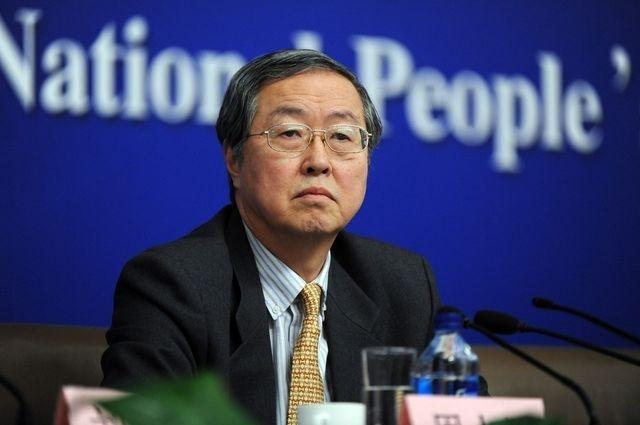
Zhou Xiaochuan
 China
China- Zhou Xiaochuan: A Pioneering Economist and Banker
- Early Life and Education
- Career in Government and Finance
- Reform of the Banking System
- Governor of the People's Bank of China
- Recognition and Legacy
Zhou Xiaochuan: A Pioneering Economist and Banker
Zhou Xiaochuan, the current Governor of the People's Bank of China (PBOC), is a highly respected economist and banker both domestically and internationally. He has proven to be an exceptional professional and has significantly reformed China's banking system, leading to speculation that his political career may extend beyond his current role.
Early Life and Education
Zhou was born in Yixing, Jiangsu, in 1948. His father, a high-ranking official, played a significant role in the industrial development of China. Zhou's early years were marked by the turmoil of the Cultural Revolution, but he later excelled in his studies, graduating from the Beijing Institute of Chemical Technology in 1975 and earning a doctorate in automation and system engineering from Tsinghua University in 1985.
Career in Government and Finance
After his graduation, Zhou worked at the Beijing Automation Research Center as an engineer. In 1986, he joined the State Council's Economic Restructuring Group and became deputy director of the Institute for Research on Chinese Economic Reforms. From 1986 to 1989, he served as an assistant to the Minister of Foreign Trade and also held positions in the National Committee for Economic Reforms.
Following the Tiananmen Square protests in 1989, Zhou joined the Bank of China, where he served as executive director and vice president from 1991 to 1995. In 1995, he became the head of the State Administration of Foreign Exchange. From 1996 to 1998, he also served as deputy governor of the PBOC.
Reform of the Banking System
In 1998, Zhou was appointed president of the China Construction Bank. Under his leadership, the bank played a crucial role in addressing the country's mounting banking debt problem. Zhou also played a significant role in managing China's foreign exchange reserves.
From 2000 to 2002, Zhou chaired the China Securities Regulatory Commission. During this period, he earned the nickname "Zhou the Butcher" for his aggressive campaign against corruption, which caused share prices to decline. However, in 2001, he was forced to abandon his plans to reduce the state's shareholding in the stock market due to adverse market reactions.
Governor of the People's Bank of China
Zhou became Governor of the PBOC in December 2002, a position he has held for two terms, the maximum allowed. During his tenure, he has overseen the resolution of 865 billion worth of non-performing loans in China's banking system.
Recognition and Legacy
Zhou Xiaochuan is widely regarded as one of the most intelligent members of China's leadership. He is known for his academic accomplishments and is considered "China's most capable technocrat." Notably, he is the only high-ranking Chinese politician to have published in a Western scientific journal.
In March 2013, Zhou was reappointed as Governor of the PBOC, making him the longest-serving central bank governor in the PRC's history. His record of reforming China's financial system and his expertise in economics continue to make him a highly influential figure in both domestic and global economic circles.


