Zinaida Tusnalobava
 Belarus
- Biography of Zinaida Tusnolobova
- Early Life and Education
- Marriage and Military Service
- The Battle of Kursk and Severe Injury
- Life After the War
- Family and Legacy
Biography of Zinaida Tusnolobova
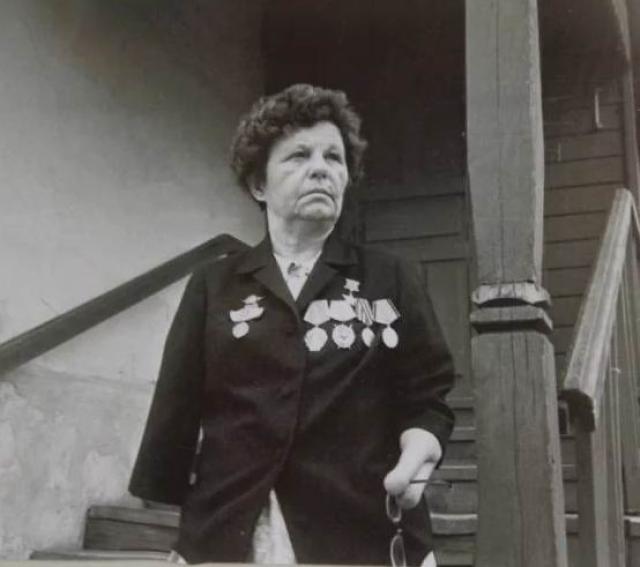
Zinaida Mikhailovna Tusnolobova-Marchenko was a Soviet military doctor, a participant of the Great Patriotic War, and a Hero of the Soviet Union (1957). Her life is a true chronicle of the struggle against what seemed impossible to defeat. She went through fire, death, her own helplessness, and managed to become beloved and happy.
Early Life and Education
Zinaida was born on May 20, 1920, in the village of Shevtsovo in the Polotsk District of the Vitebsk Province. Her family, led by her father Mikhail Mikhailovich Morozov, a Russian by origin, moved to Siberia in the 1930s and settled in the village of Novopokasma near Leninsk-Kuznetsky. After her father's arrest in 1937, the Morozovs changed their surname to Tusnolobov. In Leninsk-Kuznetsky, where most residents worked in the coal industry, Zinaida became a laboratory chemist after completing seven years of schooling.

Marriage and Military Service
Zinaida met a handsome young man named Iosif Marchenko, and they got married in May 1941, although their marriage was not officially registered. Shortly after their marriage, Iosif was mobilized and sent to the front, and Zina, who had been working in her usual position, realized that she also wanted to fight the enemy. She enrolled in nursing courses and was assigned to the active army in the spring of 1942. Zinaida became a sled instructor in the 303rd Rifle Division, defending the Voronezh Front. Despite her fragile appearance, she carried wounded soldiers on her back without paying attention to the danger. In her first battle, Zinaida saved the lives of forty soldiers and received her first combat award, the "Red Star". Throughout her time on the front, Zinaida saved the lives of 123 wounded Soviet soldiers.
The Battle of Kursk and Severe Injury
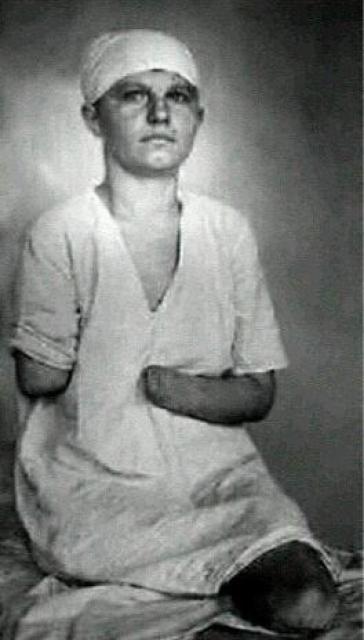
In the winter of 1943, preparations for a military operation on the Kursk Bulge began on the Voronezh Front. Zinaida's unit, the Seventh Company of the 849th Rifle Regiment, was engaged in heavy fighting near Gorshchechnoye station, repelling attacks by surrounded German troops. Zinaida heard that her commander had been wounded and rushed to help him, but it was too late for Mikhail Timoshenko. Suddenly, Zinaida felt a strong weakness and realized that she had been severely wounded in the leg before losing consciousness. She regained consciousness after being severely beaten - a German soldier who noticed that she was still alive tried to finish her off with the butt of his rifle. Unconscious, Zina spent a day in the snow mixed with blood and ashes, and the reconnaissance team that found her had to spend a lot of time freeing her from the icy trap. Zinaida was taken to a hospital where military doctors saved her life, but they were unable to save her frostbitten limbs. The twenty-three-year-old woman underwent eight complex surgeries, endured days of pain only with painkillers, but not once did her roommates hear a complaint from her.
Life After the War
In addition to her physical suffering, Zinaida also experienced emotional torment - how to tell her beloved Iosif about everything that had happened to her, as she didn't want to become a burden to him. Finally, she gathered the courage to dictate a letter to a nurse on duty. In a brief and restrained manner, Zinaida wrote that she no longer had arms and legs and that she didn't want to be a burden to her husband. While waiting for a response, Zinaida did not dwell on her worries. She encouraged other wounded soldiers who could not come to terms with their disabilities and even gave a speech at the Uralmash plant, expressing regret that she couldn't contribute to the victory over the enemy anymore and asked the workers to make at least one rivet in her place. The speech made an indelible impression on all those present, and the workers of Uralmash collected five additional tanks, writing on their armor, "For Zina Tusnolobova!".
Family and Legacy
Finally, Zinaida received the long-awaited letter from Iosif Marchenko. She opened it with her teeth and read with excitement that no troubles could destroy their love, that they would always be together and live happily. The letter gave Zinaida new strength. She learned to write with the help of a rubber cuff worn on her amputated right arm above the elbow and agreed to a complex operation in which her left forearm bones were split, and muscles were transplanted there. Over time, Zina was able to take care of herself and hoped to be able to move independently. While in the prosthetic institute, Zinaida wrote a letter that was published in a front-line newspaper in 1944 and was read to soldiers before the assault on Polotsk. Since then, many people wrote to Zinaida, and her name appeared on tanks, planes, and artillery pieces. After the war, Zinaida and Iosif, who also suffered injuries and walked with a cane since then, returned to Leninsk-Kuznetsky and registered their marriage. They had two sons, Slava and Tolya, but unfortunately, both infants died from an infectious disease. The family decided to move to Zina's hometown of Polotsk. Iosif started working at the Pishchevik collective farm, and Zina became a radio announcer. She also engaged in public and party work, managed all household chores, and even darned stockings. In 1951, their son Vladimir was born, who later became a worker at Gorgaz, and in 1959, their daughter Nina was born, who chose to become a seamstress. In 1957, Zinaida Tusnolobova was awarded the title of Hero of the Soviet Union, the Gold Star medal, and the Order of Lenin. In 1965, she received the highest international award for nurses, the Florence Nightingale Medal. Unfortunately, the severe injury had a lasting impact on Zinaida's health. She passed away in May 1980, before turning sixty, and was buried in Polotsk. The Polotsk Medical College, as well as streets in Polotsk, Leninsk-Kuznetsky, and the Gorshchechnoye station, were named after Zina Tusnolobova.


